In December 2025, CISS Youth at the Center for International Security and Strategy (CISS), Tsinghua University, organized a series of group exchange activities under the “Academic Partners” program. Centered on talent cultivation, the program encourages members of CISS Youth to form “academic partnerships” with CISS research fellows, engaging jointly in academic research and practical activities to enhance students’ research capacity and practical skills. Conducted on a group basis, the exchange activities focused on frontier topics such as international politics, technological competition, and major power relations. Through a format combining presentations, faculty guidance, and open discussion, participants engaged in in-depth exchanges on academic challenges, career planning, and personal development. The activities effectively strengthened communication and mutual understanding among academic partners and yielded positive outcomes.
Group Led by Dr. Song Bo
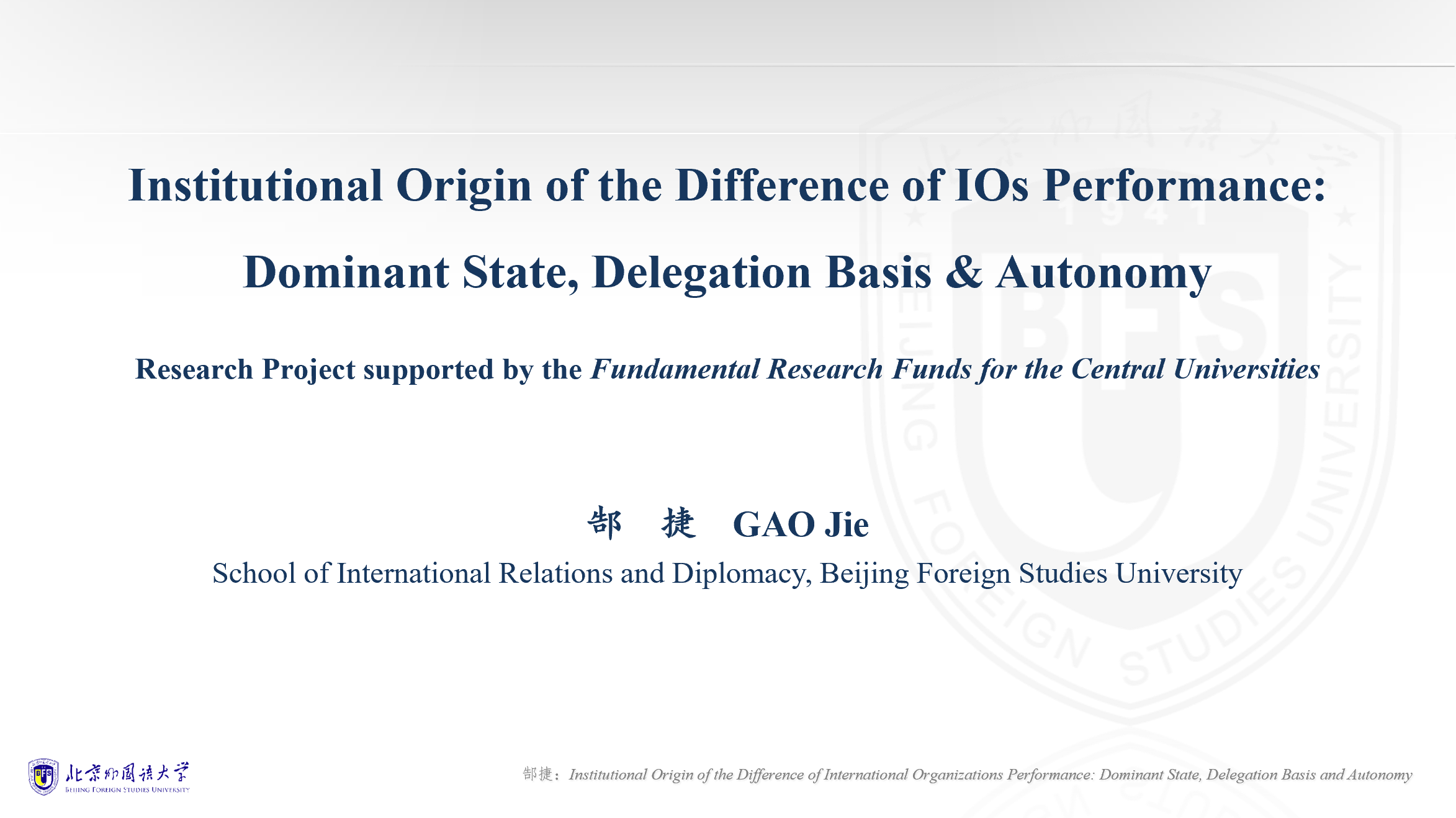
On December 22, Dr. Song Bo met with student Gao Jie for an academic exchange. Gao Jie presented a research paper entitled “The Institutional Origins of Performance Differentiation in International Organizations: Dominant State Control, Authorization Bases, and Organizational Autonomy.” The study explores the deeper causes behind variations in operational efficiency among international organizations within the global governance system, combining theoretical significance with real-world relevance. Dr. Song highly affirmed the research topic and overall framework, and suggested refining variable definitions to better align with research contexts, simplifying the operationalization of concepts to reduce measurement difficulty, expanding authoritative data sources, and strengthening the internal logical coherence of the paper. He further encouraged Gao Jie to move beyond single institutional factors and deepen the analysis from the perspective of multidimensional interactive effects, providing clear guidance for future research development.
Group Led by Dr. Dong Ting
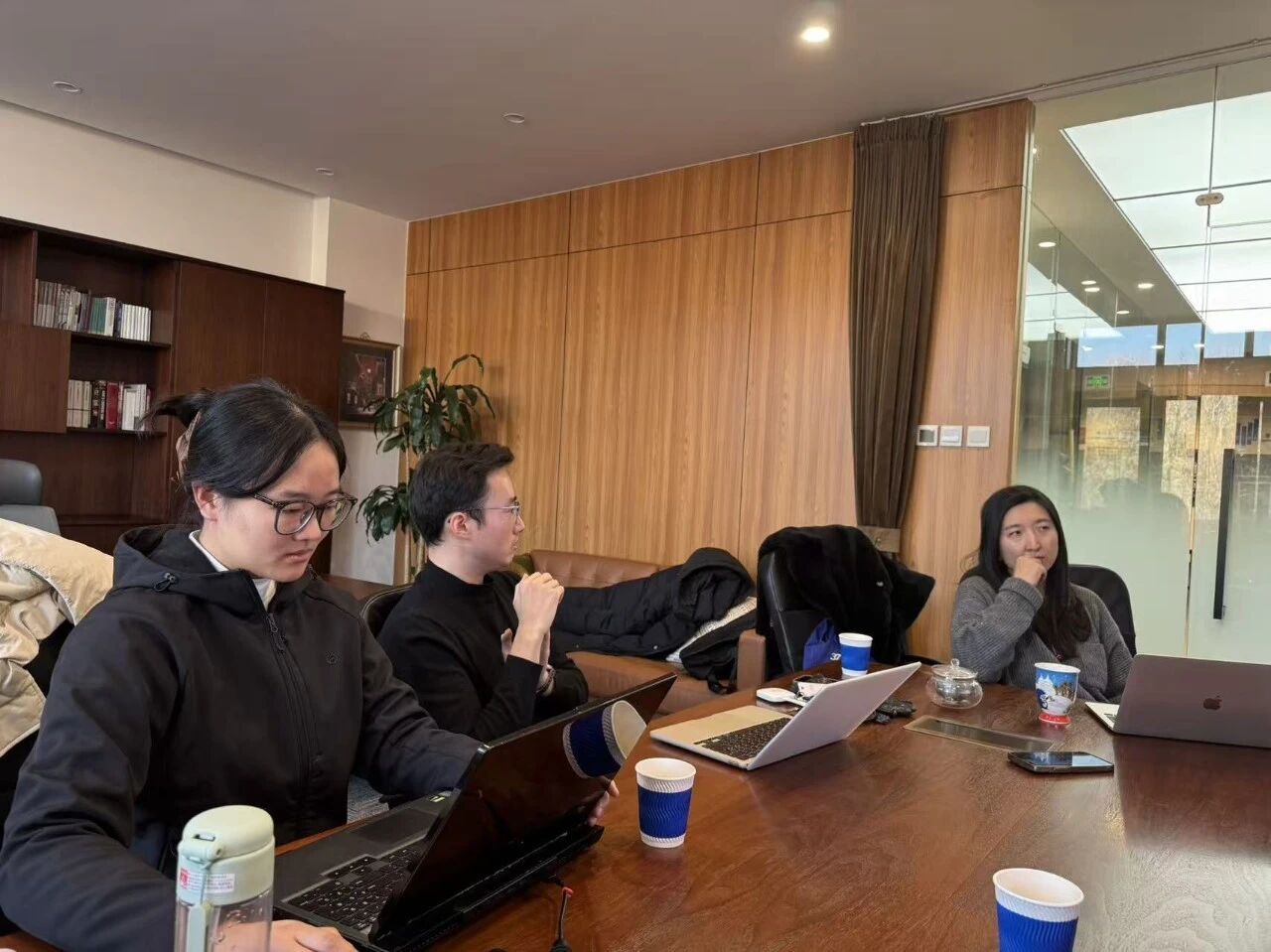
On December 24, Dr. Dong Ting met with students Meng Qingyi and Liu Jiawen. Meng Qingyi focused on research into state–enterprise alliances under U.S.–China technological competition, proposing a 2×2 analytical framework centered on “network centrality × structural exposure to China.” He elaborated on the model’s innovative integration of core-node characteristics in technological networks with firms’ market embeddedness and dependence on China. While affirming the model’s innovative value, Dr. Dong noted the need to account for heterogeneity in defining “centrality” across different technological sectors—such as semiconductors and digital platforms—to avoid rigid application of a single standard. He also pointed out that measurements of firms’ structural exposure to China in cross-national contexts should be adapted to differing market environments and policy settings in order to enhance indicator validity.
Liu Jiawen focused on issues including corporate–government liaison mechanisms and the development of the AI industry. Dr. Dong outlined relevant research directions and suggested paying closer attention to dynamic corporate data and in-depth industry reports, which can more effectively capture evolving trends and offer stronger real-world guidance. He also recommended incorporating perspectives such as applications of large Chinese-language AI models developed at Stanford as reference points, thereby enriching analytical approaches and further refining the research framework.
Group Led by Dr. Shi Yan
On December 25, Dr. Shi Yan held discussions with students Zheng Zeyu and Zhang Shuoning. Zheng Zeyu focused on the core issue of U.S. strategic retrenchment, explaining the logic behind indicator identification, measurement methods, and preliminary findings in his research, with the aim of providing a quantitative analytical approach to understanding adjustments in U.S. global strategy. Zhang Shuoning used Germany’s rise as a representative case to examine the behavioral logic of rising states in making security strategy choices, emphasizing that the pursuit of relative rather than absolute security enables rising states to achieve more stable and sustainable development within the international system. Dr. Shi fully affirmed both students’ problem awareness, analytical frameworks, and research methods, and suggested further refining core concept definitions, strengthening multi-case comparative analysis and empirical data support, and enhancing overall rigor and persuasiveness. Drawing on his own experience, Dr. Shi also engaged in in-depth discussions with the students on academic advancement and career development, offering targeted advice.

Group Led by Dr. Sun Chenghao
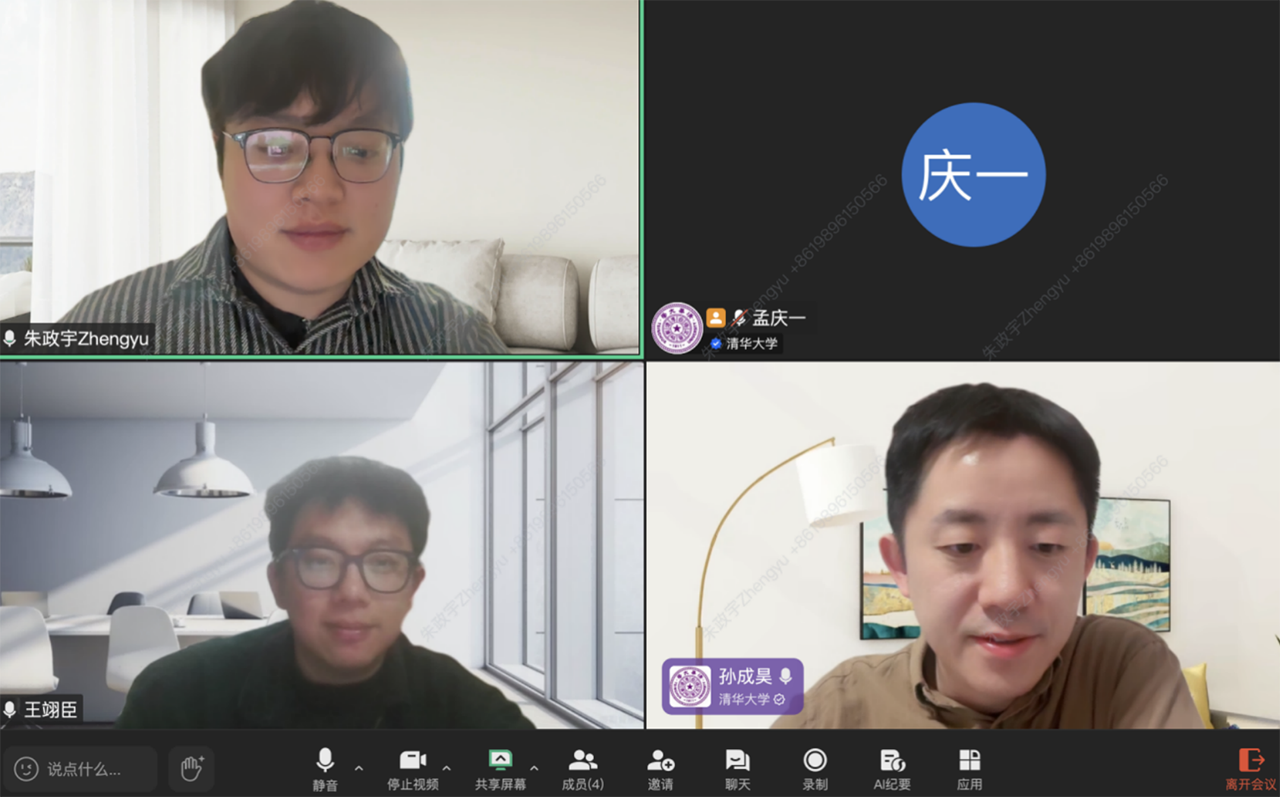
On December 25, Dr. Sun Chenghao met with students Zhu Zhengyu and Wang Yichen. Drawing on his extensive academic experience, Dr. Sun explained key aspects of writing commentary articles in both Chinese and English, including methodological choices, argument feasibility, material selection, and structural optimization. He emphasized that commentary writing should balance academic rigor with clarity and readability for public communication. He suggested that students begin by practicing Chinese-language commentary writing, and on the basis of solid evidence and well-structured logical reasoning, gradually expand into English writing, forming a stable analytical framework through sustained output.
In response to Zhu Zhengyu’s presentation on “An Analysis of NVIDIA’s Role in U.S. Technology Policy Toward China,” Dr. Sun noted that as artificial intelligence and advanced semiconductors become core arenas of major power competition, the structure of technological interdependence between China and the United States is undergoing profound changes, with global supply chains shifting from market-driven logic toward more pronounced strategic considerations. As a key global supplier of AI computing infrastructure, NVIDIA is deeply embedded in the U.S. capital market, innovation system, and civil–military integration ecosystem. This “dual embeddedness” places the company at a structural nexus of U.S. technology policy toward China. Dr. Sun suggested further refining research questions and causal mechanisms by examining the interaction among policy evolution, supply chain positioning, and corporate behavior, while strengthening the literature review and evidentiary base to steadily advance the writing process.
Group Led by Dr. Wen Jing
On December 30, Dr. Wen Jing met with students Zhang Yazhi and Li Xin. Zhang Yazhi shared recent academic reflections on U.S. domestic political dynamics and strategies in international public opinion competition, discussing with Dr. Wen potential directions for deeper inquiry, particularly the logic of discourse power competition in the international public opinion arena. Li Xin approached her research from the perspective of narrative and communication strategies, presenting an in-depth analysis of the narrative construction, dissemination pathways, and evolving dynamics surrounding the South China Sea issue in recent interactions between the United States and the Philippines. She also sought guidance from Dr. Wen on career planning in the media field, in light of her current stage of study. Dr. Wen provided targeted suggestions on methodological refinement and perspective expansion for both students, helping them clarify future research priorities. Taking into account their different academic stages and development choices, Dr. Wen also drew on her own educational and professional experiences to encourage them to explore boldly, remain true to their aspirations, and pursue their goals in both academic research and career development, offering concrete advice on career planning and growth pathways.
Group Led by Dr. Wang Congyue
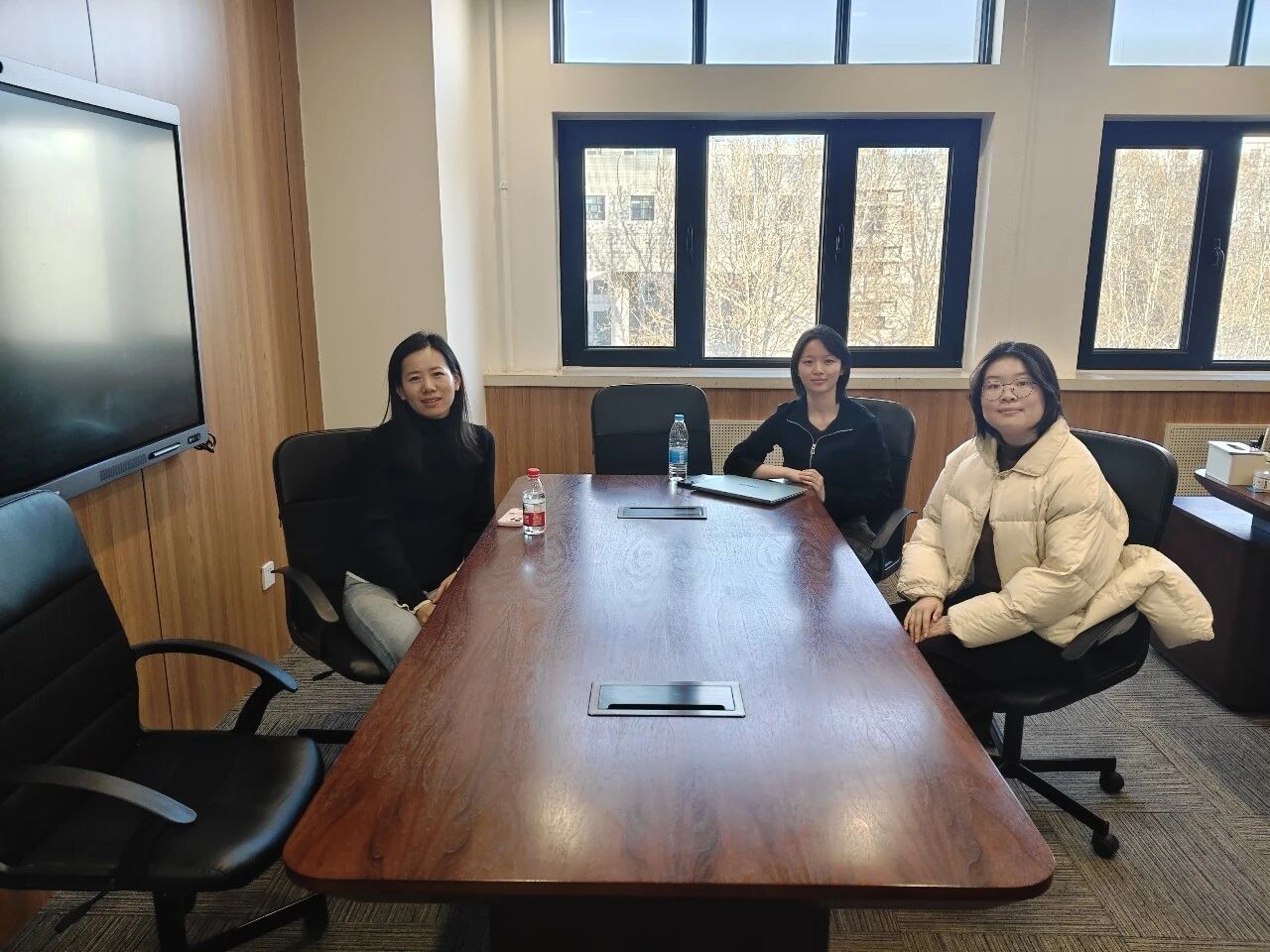
On December 31, Dr. Wang Congyue engaged in an academic exchange with student Ma Chubo on topics related to China–U.S. relations. Ma Chubo delivered a presentation entitled “The History and Reality of China–U.S. Relations,” drawing on classic cases of major power interactions during the Cold War to systematically distill analytical dimensions with broad explanatory power, including core strategic objectives, mechanisms of interest exchange, and key pathways for conflict management. On this basis, he attempted to construct an analytical framework for understanding the evolution of contemporary China–U.S. relations. Dr. Wang highly affirmed the research topic’s strong sense of real-world relevance and global perspective, noting that combining systematic reviews of historical experience with dynamic observation of current international developments can deepen understanding of the complexity and structural contradictions of China–U.S. relations, and help generate richer and more extensible academic insights. He further suggested that future research build upon the existing framework by incorporating more diverse empirical cases and data support, thereby enhancing analytical robustness and persuasiveness, and further elevating the study’s academic value and practical relevance.