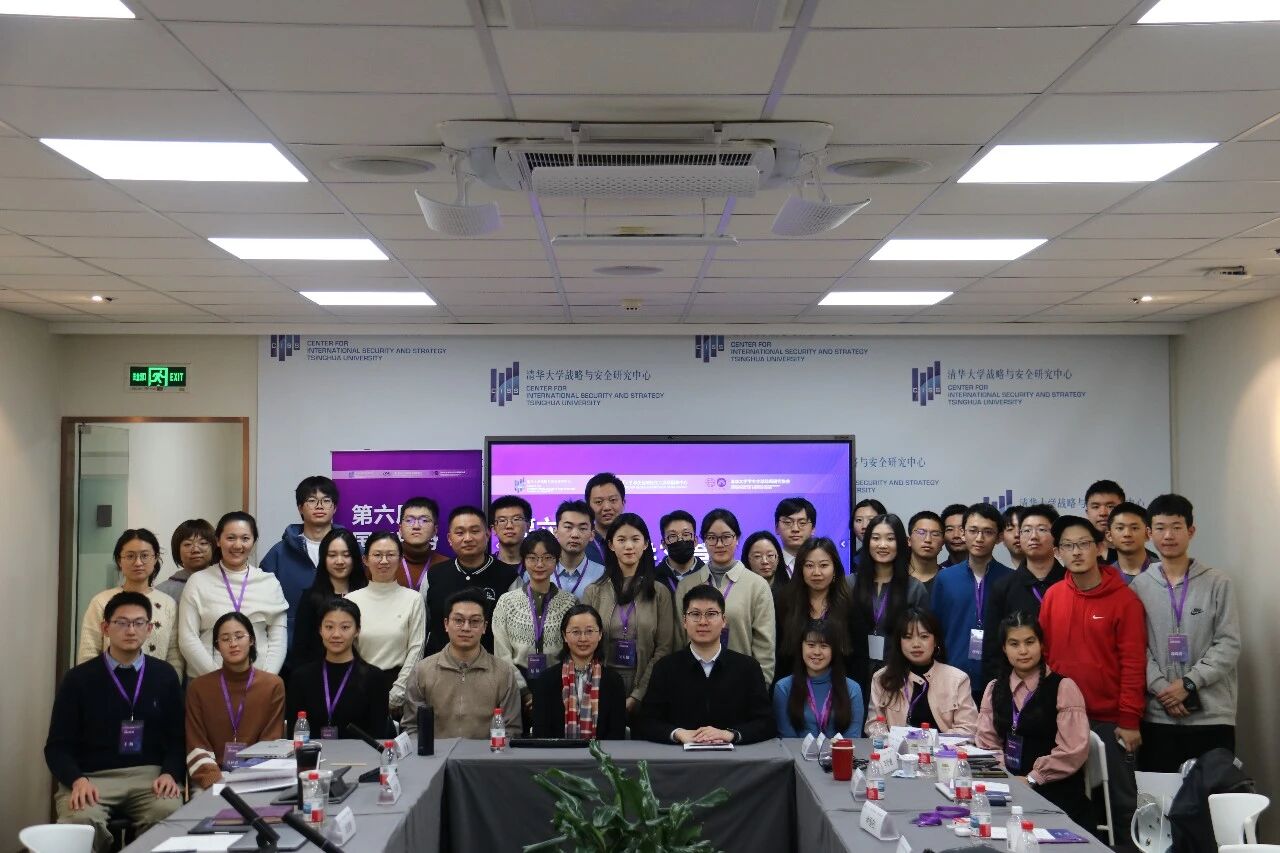
On December 28, 2025, the Center for International Security and Strategy (CISS) at Tsinghua University and the Center for Global Competence Development for Students (CGCD) jointly hosted the Sixth International Affairs Workshop. Open to university students nationwide, the workshop aims to cultivate strategic thinking and enhance understanding of international affairs among young scholars aspiring to pursue careers in international relations, diplomacy, foreign affairs, and strategic studies. A total of 33 students from institutions including Tsinghua University, Peking University, Renmin University of China, the Central Party School, and the National University of Defense Technology participated in the program. The workshop was co-organized by the Student Association for International Security Studies at Tsinghua University (SAISS). Liao Ying, Executive Deputy Director of the Tang Zhongying Global Development Center for Students at Tsinghua University, and Huang Cheng, Director of CGCD, attended the event.
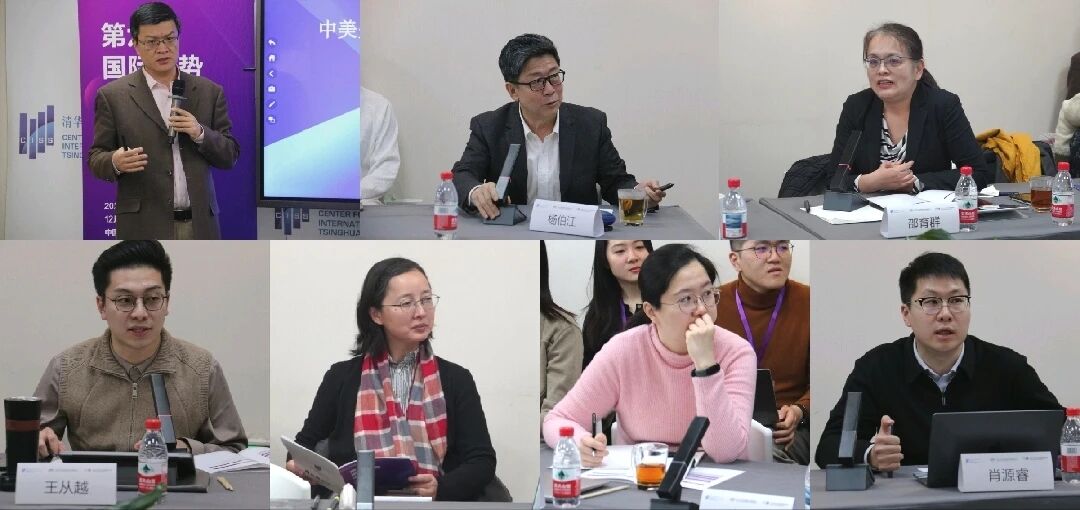
The opening ceremony was chaired by Da Wei, Director of CISS and Professor of International Relations at Tsinghua University, who delivered welcoming remarks. He warmly welcomed all participants and noted that CISS and CGCD have jointly organized the International Affairs Workshop for six consecutive editions, with talent cultivation as its fundamental objective. He encouraged participants to enhance their global competence through the program, cultivate an international outlook and strategic mindset, and develop a professional worldview for their future careers. Drawing on his own experience, Da Wei also emphasized the importance of the workshop in helping students discover and refine their research interests. In closing, he briefly introduced the keynote speakers of the workshop and urged participants to seize the opportunity and engage seriously in learning.
Shao Yuqun, Director and Research Fellow of the Institute of Taiwan, Hong Kong and Macao Studies at the Shanghai Institutes for International Studies, delivered a lecture entitled “China–U.S. Relations and the Taiwan Question: Past, Present, and Future.” She systematically reviewed the history of strategic competition between China and the United States over the Taiwan issue. Looking back, she cited international legal documents such as the Cairo Declaration and the Potsdam Proclamation to demonstrate the historical and legal basis for Taiwan being an integral part of China. She also conducted an in-depth analysis of the underlying differences between the terms “acknowledge” and “recognize” as used in the three China–U.S. Joint Communiqués, pointing out the core divergence between the two sides regarding Taiwan’s status. She further examined U.S. policy statements in different periods concerning the “Three No’s” and opposition to unilateral changes to the status quo, arguing that the essence of U.S. policy lies in the notion of the “undetermined status of Taiwan” and the use of the Taiwan issue to constrain China’s overall development. Looking ahead, Shao Yuqun emphasized the importance of firmly implementing the Party’s overall strategy for resolving the Taiwan question in the new era, advancing the cause of national reunification while maintaining initiative and control over cross-Strait relations, and sustaining strategic confidence and patience amid the dynamic balance of China–U.S. relations.
Yang Bojiang, Director and Research Fellow of the Institute of Japanese Studies at the Chinese Academy of Social Sciences, delivered a lecture on “China–Japan Relations and Major Power Competition.” He reviewed and analyzed Japan’s accelerating shift toward strategic securitization, particularly the enactment of the 2015 security legislation that allows Japan to intervene in China-related affairs through domestic law, as well as China’s comprehensive countermeasures. He further examined the confrontation between two postwar order concepts in East Asia and pointed out the illegitimacy of the San Francisco Peace Treaty in terms of both its signatories and content. Yang argued that the continuous strengthening of the Japan–U.S. alliance has shaped and reinforced Japan’s strategic perceptions. While Japan’s strategic orientation leans toward the United States, its economic interests are deeply complementary with China. In the future, Japan may further align with the United States due to the strategic binding of their alliance. Yang noted that China–Japan relations are currently at an important window of opportunity. Despite structural contradictions and differing views on regional order, China should firmly safeguard its sovereignty and the postwar international legal order while making strategic plans from a multilateral perspective, maintaining a cautiously optimistic attitude, and promoting the construction of a more balanced and inclusive regional order.
Da Wei also delivered a presentation entitled “China–U.S. Relations After the Busan Meeting.” He first reviewed five major fluctuations in China–U.S. relations over the past eight years under three U.S. presidents from two political parties, noting that after each fluctuation, bilateral relations returned to a relatively stable state to varying degrees. On this basis, he gave an affirmative answer to the question of whether China–U.S. relations are forming a “new normal.” On the U.S. side, the core policy logic of a second Trump term shows a shift from globalism and liberalism toward nationalism, statism, and conservatism. On the Chinese side, following three key developments—the “DeepSeek moment,” the U.S. “Liberation Day tariffs” from April to May 2025, and rare earth export control measures—China’s strategic mindset in its competition with the United States has become noticeably more confident. Against this backdrop, a potential “turning point” in China–U.S. relations may have arrived, with confrontational sentiment easing and a realist, stable structure gradually taking shape. Da Wei argued that rebuilding economic interdependence between the two countries will be an important means for steering bilateral relations toward “rebalancing” in the near to medium term.
The role-playing simulation session of the workshop was moderated by CGCD lecturer Xiao Yuanrui. Participants simulated China, the United States, Japan, and the Republic of Korea, engaging in multilateral scenario-based diplomatic consultations on the evolving Asia-Pacific security landscape and the strategic choices various parties might adopt. During the simulation, participants articulated positions and interests based on their respective countries, focusing on key regional security and governance issues such as China–U.S. economic and trade relations, the Taiwan Strait situation, the denuclearization process on the Korean Peninsula, and Japan’s discharge of nuclear-contaminated water. The discussions covered both macro-level strategic competition and coordination, as well as specific policy instruments and risk management pathways, demonstrating strong problem awareness and real-world relevance.
Following the simulation, Wang Congyue, Postdoctoral Research Fellow at CISS, provided professional commentary on the participants’ overall performance. He noted that the simulation featured diverse topics and clear problem orientation, fully reflecting the participants’ sustained attention to international hotspot issues and thorough preparation. He also observed that participants were able to accurately grasp national diplomatic positions and strategic logic, demonstrating awareness of diplomatic posture, negotiation thinking, and policy articulation skills. Such role-playing exercises, he emphasized, help break single-perspective thinking and enhance participants’ capacity for analysis, communication, and negotiation in complex international contexts, contributing positively to the cultivation of global vision and strategic judgment among young students.
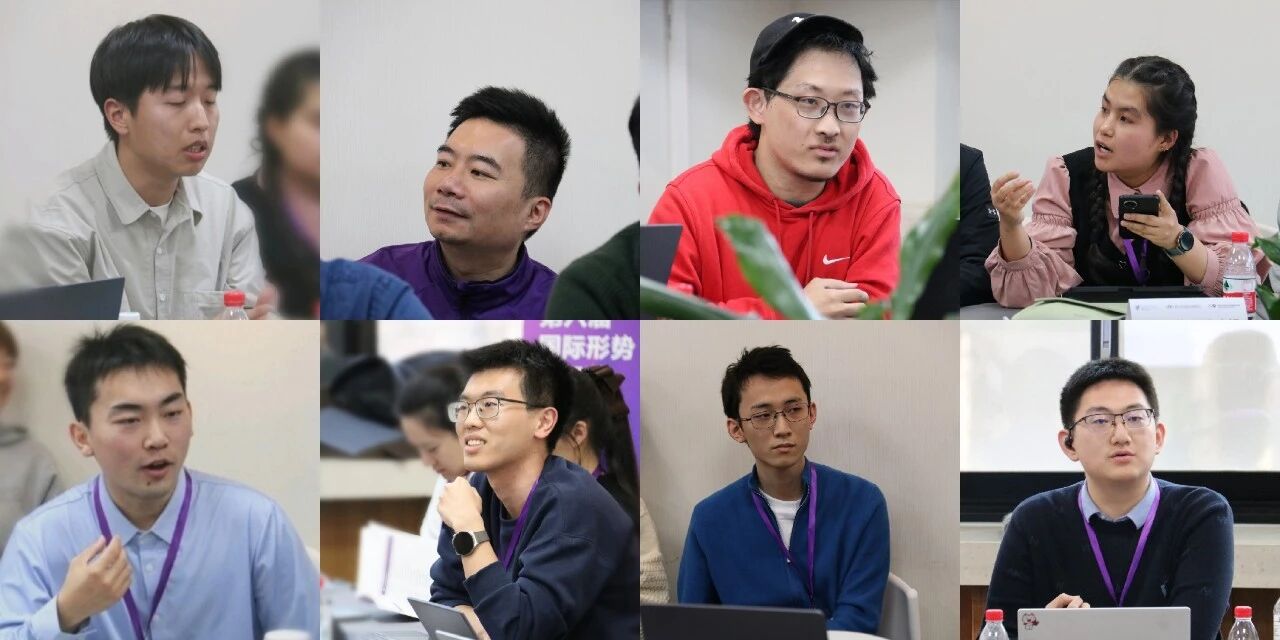
In the closing ceremony, Xiao Yuanrui delivered concluding remarks, noting that the workshop created a valuable academic exchange platform that organically integrated lectures and practice, effectively enhancing participants’ research capabilities and international outlook. He emphasized that young people shoulder the important mission of connecting civilizations and jointly shaping the future, and expressed the hope that participants would continue to strengthen their academic research skills while also developing their global competence, writing their own chapters as youth within the broader vision of a community with a shared future for mankind. Participants shared their reflections and takeaways from the program, expressing that they had benefited greatly and found the experience deeply rewarding, and voiced their hope to continue participating in similar activities in the future.