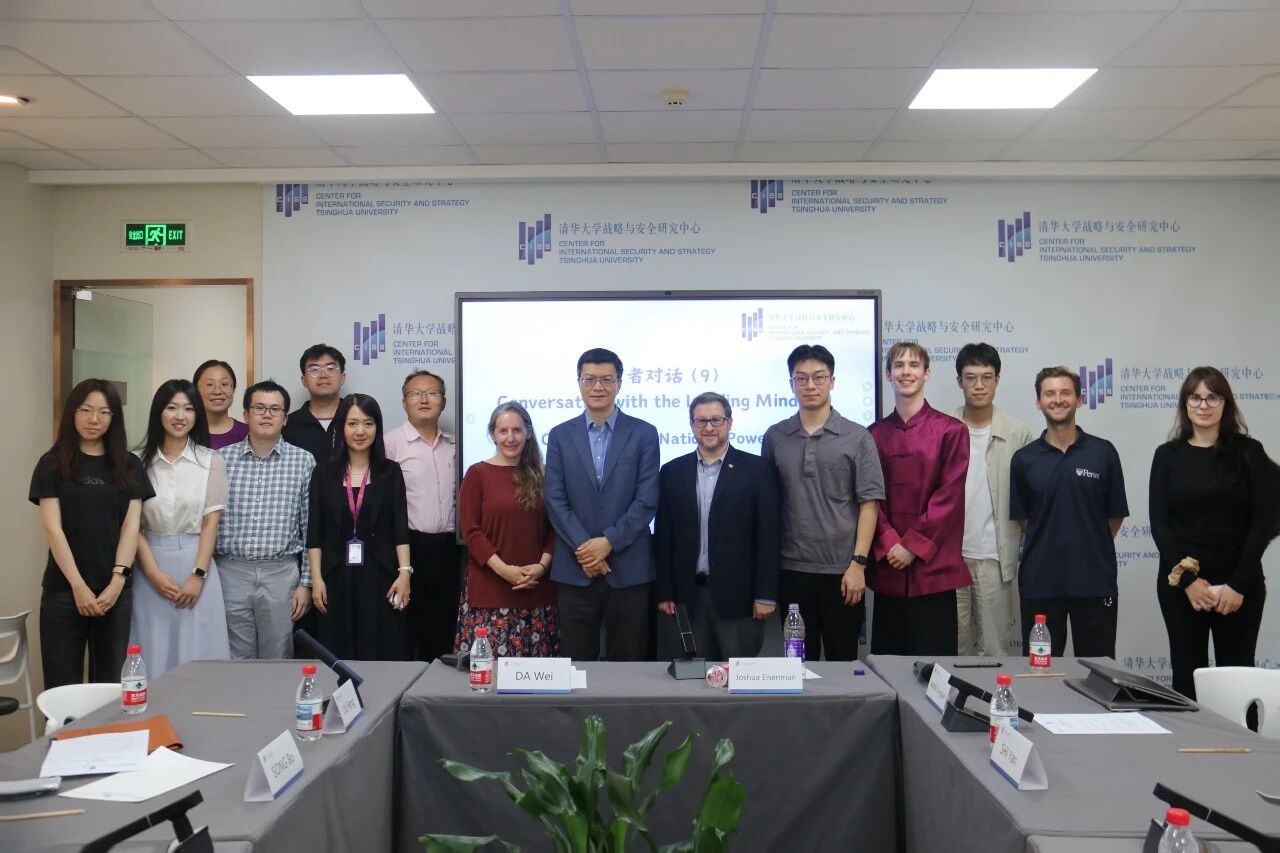
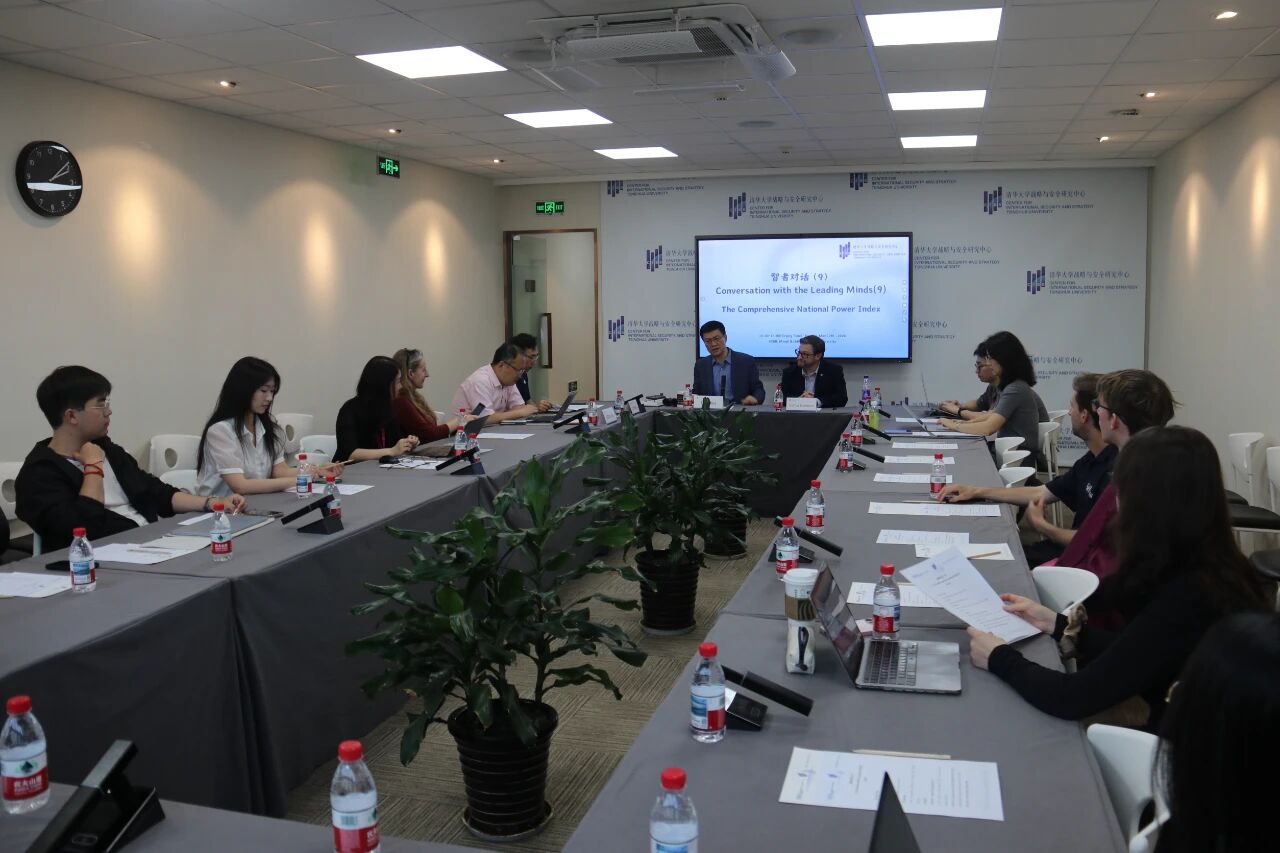
On May 12, 2026, the Center for International Security and Strategy (CISS) at Tsinghua University hosted a Wisdom Dialogue titled “The Rise and Fall of Nations from the Perspective of the Comprehensive National Power Index” in Room 428B of the Mingli Building at Tsinghua University. The event was moderated by Da Wei, with Joshua Eisenman, Professor at the Keough School of Global Affairs, serving as keynote speaker. Liu Feng, Vice Director of CISS, and Susan L. Ostermann, Associate Professor at the Keough School of Global Affairs, also attended the event. More than twenty scholars and Chinese and international students participated in the discussion.
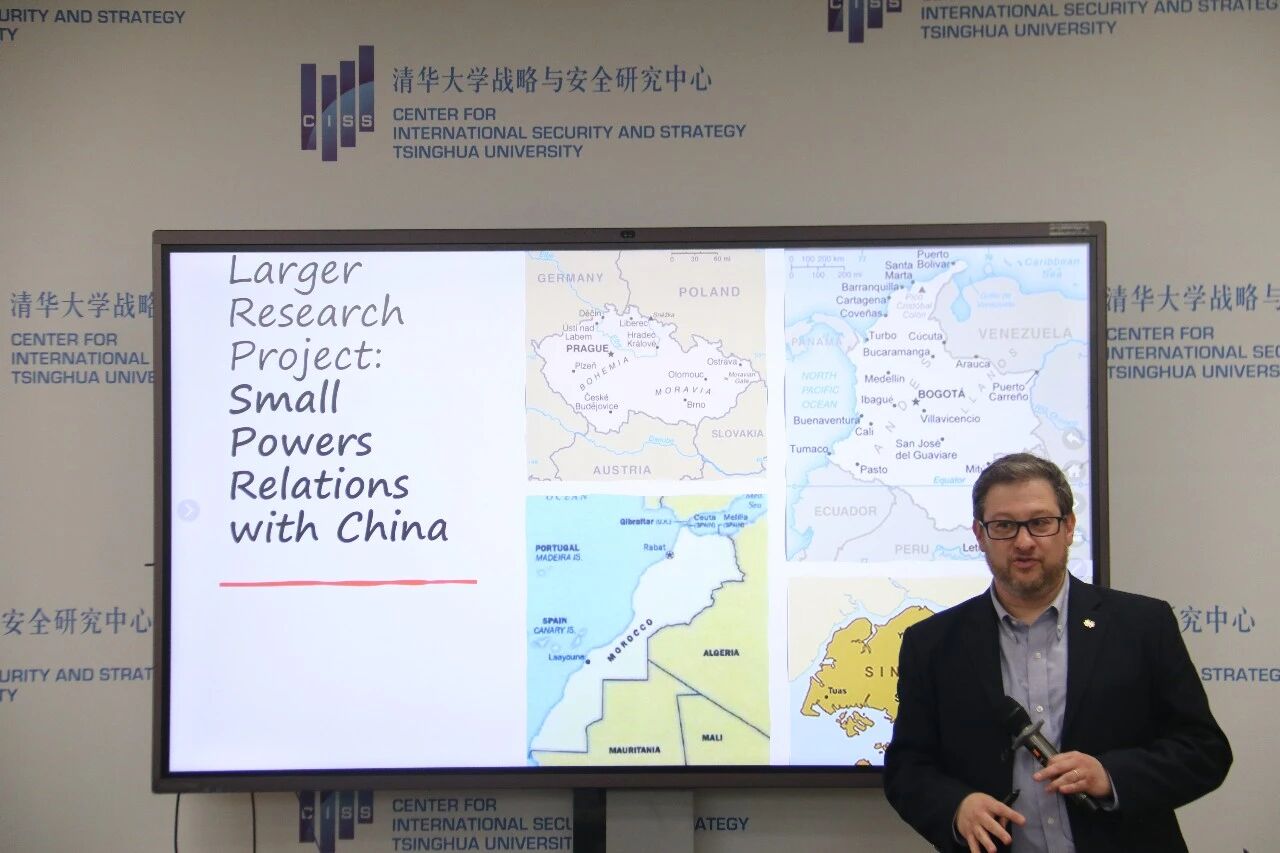
Joshua Eisenman primarily shared findings from his latest collaborative research project, the “Comprehensive National Power Index,” conducted with Meng Sisi, Senior Lecturer at Cornell University. He noted that the international community has long lacked a unified, objective, and quantifiable standard for measuring national strength, particularly in distinguishing between “small powers” and “great powers.” Existing assessment systems, he argued, often suffer from outdated data, subjective weighting methods, excessive emphasis on hard power, and insufficient consideration of soft power and sociocultural factors. To address these shortcomings, the research draws on Edward Hallett Carr’s three-dimensional framework of national power and Joseph Nye’s theory of soft power to construct a comprehensive index covering military, economic, and soft-power dimensions, using publicly available and verifiable data.
During the discussion and Q&A session, participating scholars engaged in in-depth exchanges on the index’s indicator design, weighting methods, and practical applications. Discussions focused particularly on the quantification of soft power, the weighting of military capability indicators, the incorporation of technology and artificial intelligence factors, as well as the role of political stability and governance capacity in assessing comprehensive national power. Joshua Eisenman emphasized that he hopes the Comprehensive National Power Index can serve as an open research tool to encourage more regional and comparative studies, thereby contributing to a more systematic understanding of power transitions and trends in great-power competition within the international system.