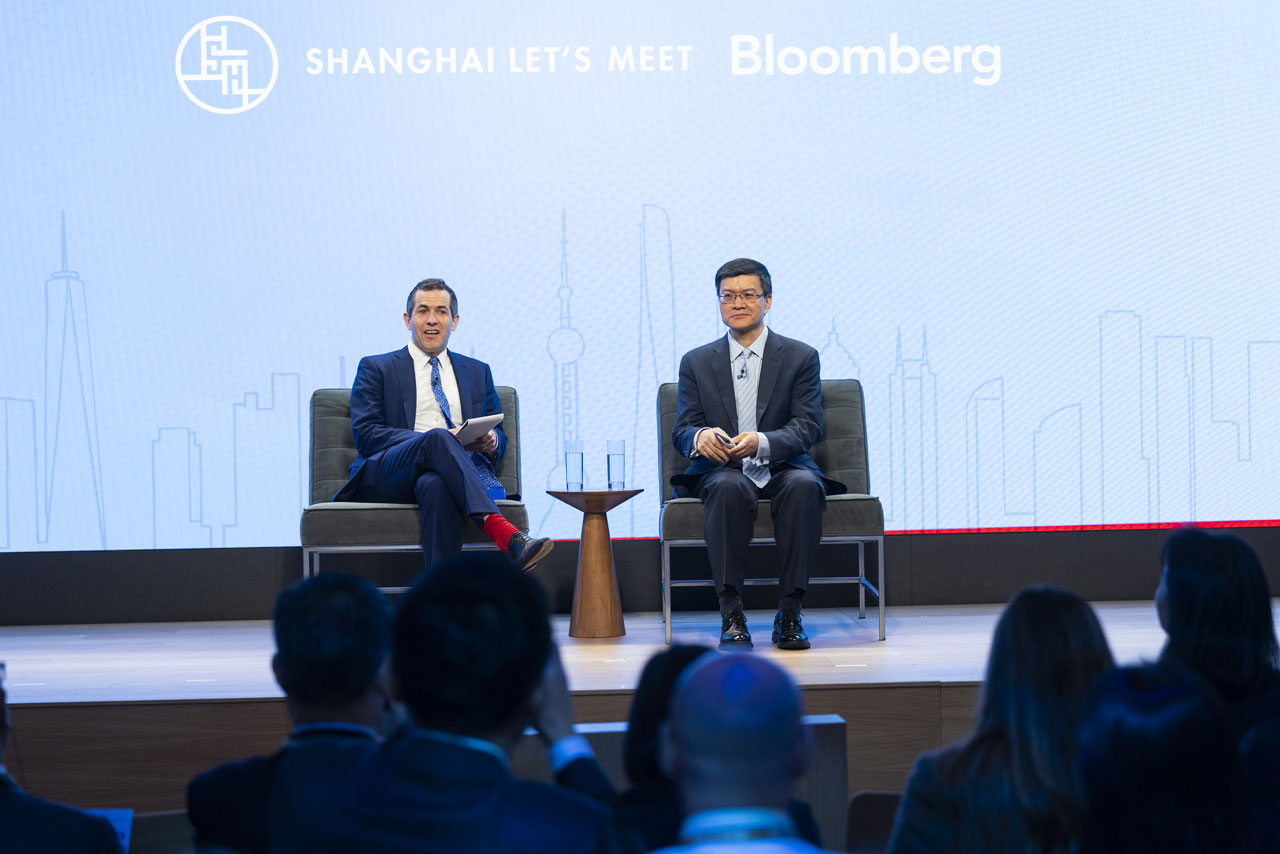
On June 30, 2026, the launch ceremony of the third season of “Bund: A Global Urban Humanities Dialogue between Shanghai and New York” and the New York Forum was held at Bloomberg’s headquarters in New York. Professor Da Wei, Director of the Center for International Security and Strategy (CISS), Tsinghua University, was invited to attend the event and engage in a keynote dialogue with Tom Orlik, Chief Economist of Bloomberg.
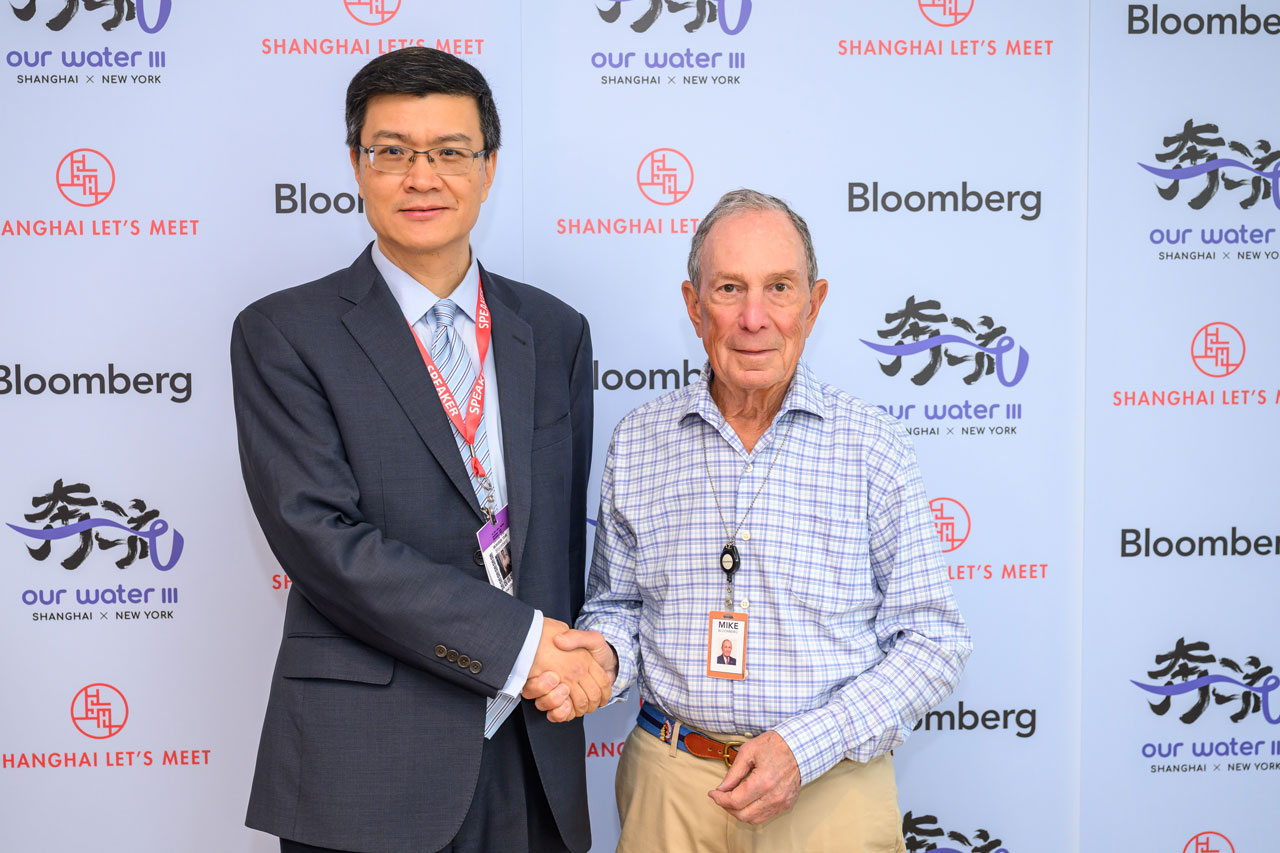
The forum was jointly organized by the Information Office of the Shanghai Municipal People’s Government and Bloomberg L.P. More than 200 guests from political, business, financial, cultural, and academic communities in China and the United States attended the forum and engaged in in-depth discussions under the theme “Rivers in Motion, Opportunities in Convergence,” jointly contributing public momentum toward building a constructive strategic stability relationship between China and the United States. Tang Zhiwen, Minister of the Embassy of the People’s Republic of China in the United States, and Michael R. Bloomberg, Founder of Bloomberg L.P. and Bloomberg Philanthropies, delivered welcome remarks. Chen Yiqun, Director of the Information Office of the Shanghai Municipal People’s Government, and Mary Schapiro, Vice Chairman of Bloomberg L.P., also delivered remarks at the event.
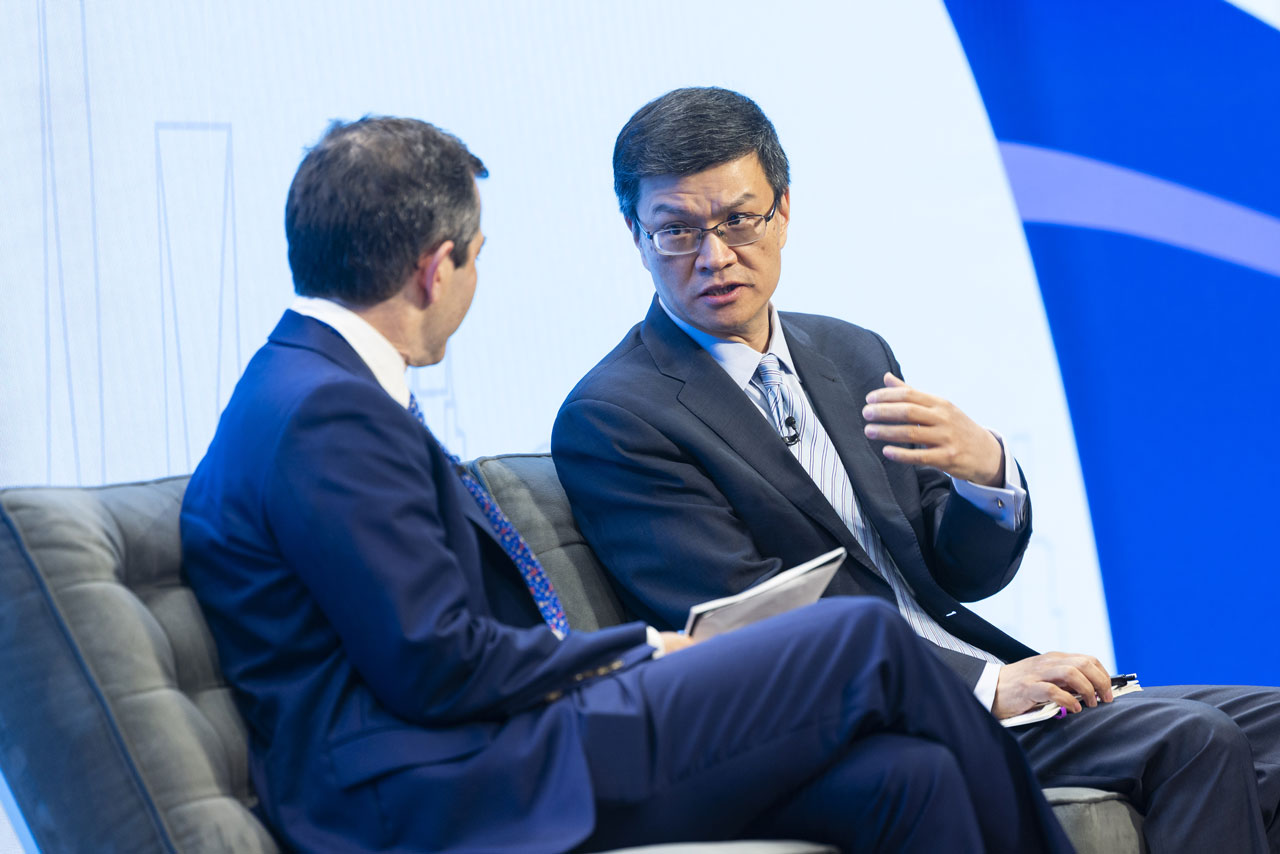
During the keynote dialogue, Da Wei and Orlik examined the relationship between Shanghai and New York against the backdrop of changing trends in globalization and China-U.S. relations, engaging in discussions on the resilience of China and the United States, competition in artificial intelligence, and other issues.
Da Wei noted that Shanghai and New York are both cities where “rivers meet oceans.” Rivers connect inland regions with the sea, bringing resources, talent, and information. Openness and inclusiveness constitute the foundation of prosperity for both cities. Over the past several decades, both China and the United States have benefited significantly from openness and globalization. As globalization shows signs of retreat, the two cities and the two economies must consider how to address the challenges and opportunities arising from these changes.
Orlik drew on historical experience, noting that the world has never truly been in a state of absolute stability and frictionless free trade. Tariffs, sanctions, and even wars have always existed. In his view, the success of Shanghai and New York lies precisely in their ability to continuously adapt to challenges in the real world. He expressed confidence that the two cities remain capable of sustaining this adaptability. c
Orlik proposed two approaches to addressing contemporary challenges. The first is market diversification. Taking China as an example, he noted that, in response to higher tariff barriers imposed by the United States, China has in recent years actively expanded into European and other emerging markets. The second is investing in resilience. When geopolitical tensions may disrupt the supply of critical goods and inputs, strategic reserves can provide a buffer. This means that, in an increasingly complex external environment, global cities must maintain openness and strengthen their connections with the world while diversifying risks and preserving key functions through market diversification and resilience-building.
c The dialogue then turned to how China and the United States perceive each other. Da Wei argued that assessments of the United States should be considered from three perspectives. First, the institutional leadership system established by the United States after World War II and further expanded following the end of the Cold War has been significantly weakened. In his view, the United States has also taken active steps in recent years to dismantle some elements of this system. Even if the United States were to embrace liberal institutionalism again in the future, rebuilding the system would be highly challenging.
Second, the so-called “relative decline” of the United States depends on the basis of comparison. Compared with China in terms of economic scale, the United States’ relative advantage has narrowed. However, compared with other developed economies such as Europe and Japan, the United States continues to maintain upward momentum. Therefore, changes in the international order should not be taken as evidence of an across-the-board decline in U.S. power.Third, the United States remains one of the most powerful countries in the world. Whether it can maintain this position in the future will depend on its own development. Among various factors, high-tech industries, particularly artificial intelligence, represent one of the most important indicators.
Orlik explained the resilience of the United States and other developed economies through their “capacity for course correction.” In his view, one should not conclude that the United States, Europe, or Japan have entered a period of long-term decline based solely on trends observed during a particular stage.
Regarding China, Orlik identified three fundamental sources of its resilience. The first is the “developmental state,” in which the government prioritizes development and works to achieve development objectives. The second is China’s enormous scale: its large population and economic size enable Chinese enterprises to operate at significant scale and thereby develop global competitiveness. The third is the latecomer advantage, which allows followers to observe what leading economies have done right and wrong and learn from and adjust their own approaches accordingly.
Orlik also noted that these advantages do not eliminate the major challenges posed by the property sector and high levels of debt. However, positive developments in new energy vehicles and other high-tech industries indicate that China still has room for continued growth.
The rapid development of artificial intelligence has further highlighted the complexity of China-U.S. relations. Da Wei noted that both countries are leading powers in high-tech fields, and neither wishes to see the other establish a dominant position in AI, particularly in artificial general intelligence.
Da Wei said that there is broad recognition in China that the country remains behind the United States in AI, although there are different assessments as to whether the gap amounts to six months or one year, and whether a lead at a given stage would have decisive significance. Against the backdrop of U.S. restrictions on technologies such as semiconductors, China’s approach is to narrow the gap as much as possible while leveraging its manufacturing strengths to apply existing AI technologies more extensively to the real economy and manufacturing sector — in other words, “catch up as closely as possible while applying as broadly as possible.”
Toward the end of the dialogue, Orlik shifted the focus from great-power competition back to domestic development. He noted that China’s exports to the United States amount to approximately 2% of China’s GDP. In his view, this indicates that the primary sources of China’s growth remain investment in its people and infrastructure, which in turn contributes to building a more dynamic and competitive economy.
The same applies to the United States. Orlik emphasized that China-U.S. relations are of critical importance and that the two countries have many areas where they can advance cooperation together. However, China-U.S. competition should not become the sole focus of either country’s attention. Both countries should promote their own prosperity through education, infrastructure development, and investment in their people. Using a phrase familiar to Chinese audiences, he suggested that both countries should “manage their own affairs well.”
Da Wei agreed with Orlik’s recommendations. He argued that China and the United States should also undertake further efforts to enrich the constructive strategic stability consensus reached at the meeting between the two countries’ leaders in May. To this end, more exchange activities similar to the New York Forum of “Bund: A Global Urban Humanities Dialogue between Shanghai and New York” are needed.
The Bloomberg Terminal livestreamed the entire New York Forum of the third season of “Bund: A Global Urban Humanities Dialogue between Shanghai and New York,” attracting the attention of global investors. Major U.S. media outlets, including The Wall Street Journal, also reported on the event.