
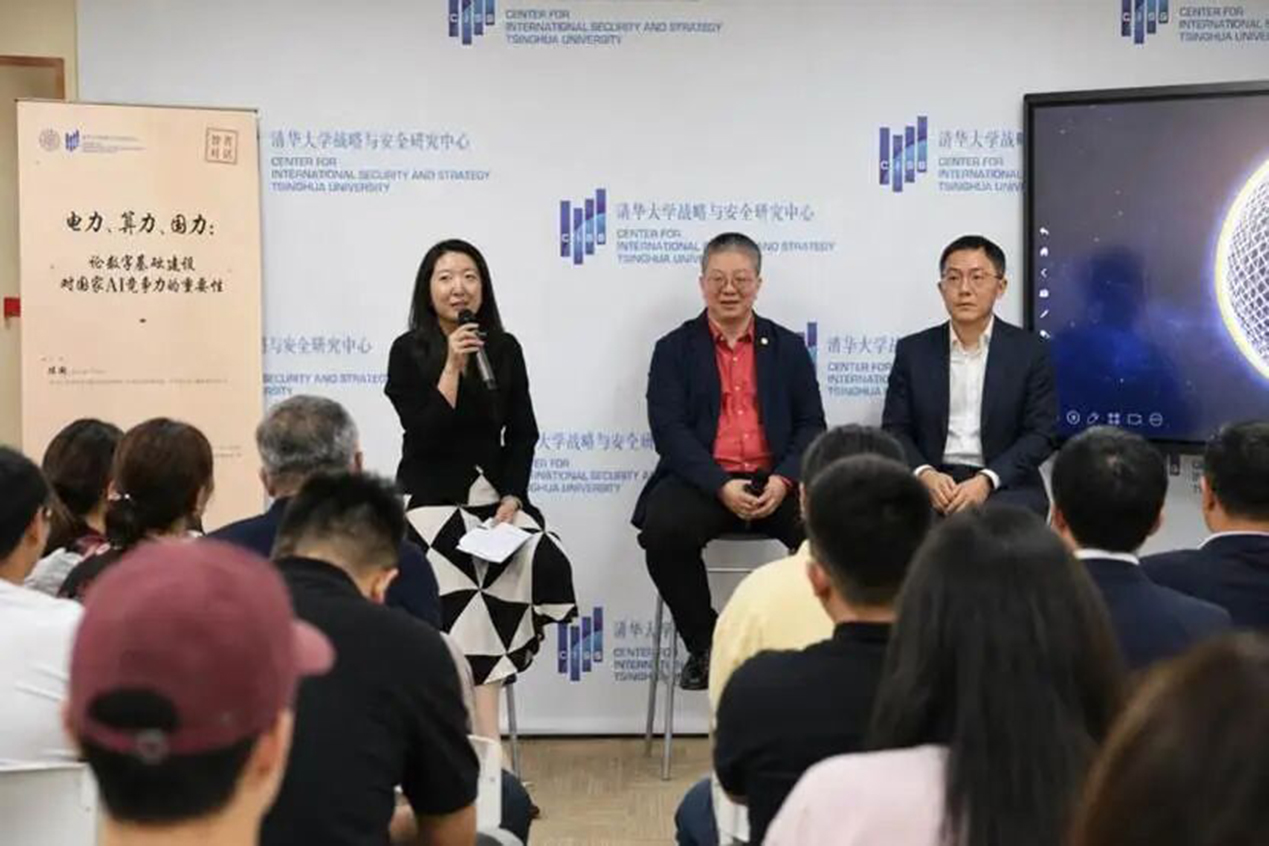
On May 25, 2026, the Center for International Security and Strategy (CISS), Tsinghua University, hosted a Conversation with the Leading Minds titled "Power, Computing, and National Strength: The Strategic Importance of Digital Infrastructure for National AI Competitiveness." The event featured George Chen, Distinguished Visiting Professor at Schwarzman College, Tsinghua University, and former Managing Director of Public Policy for Greater China, Mongolia, and Central Asia at Meta (Facebook), as the keynote speaker. Yu Xiang, Non-resident Fellow at CISS and specialist in the U.S. economy at the Institute of American Studies, Chinese Academy of Social Sciences, served as the discussant. The event was moderated by Dong Ting, Fellow at CISS.
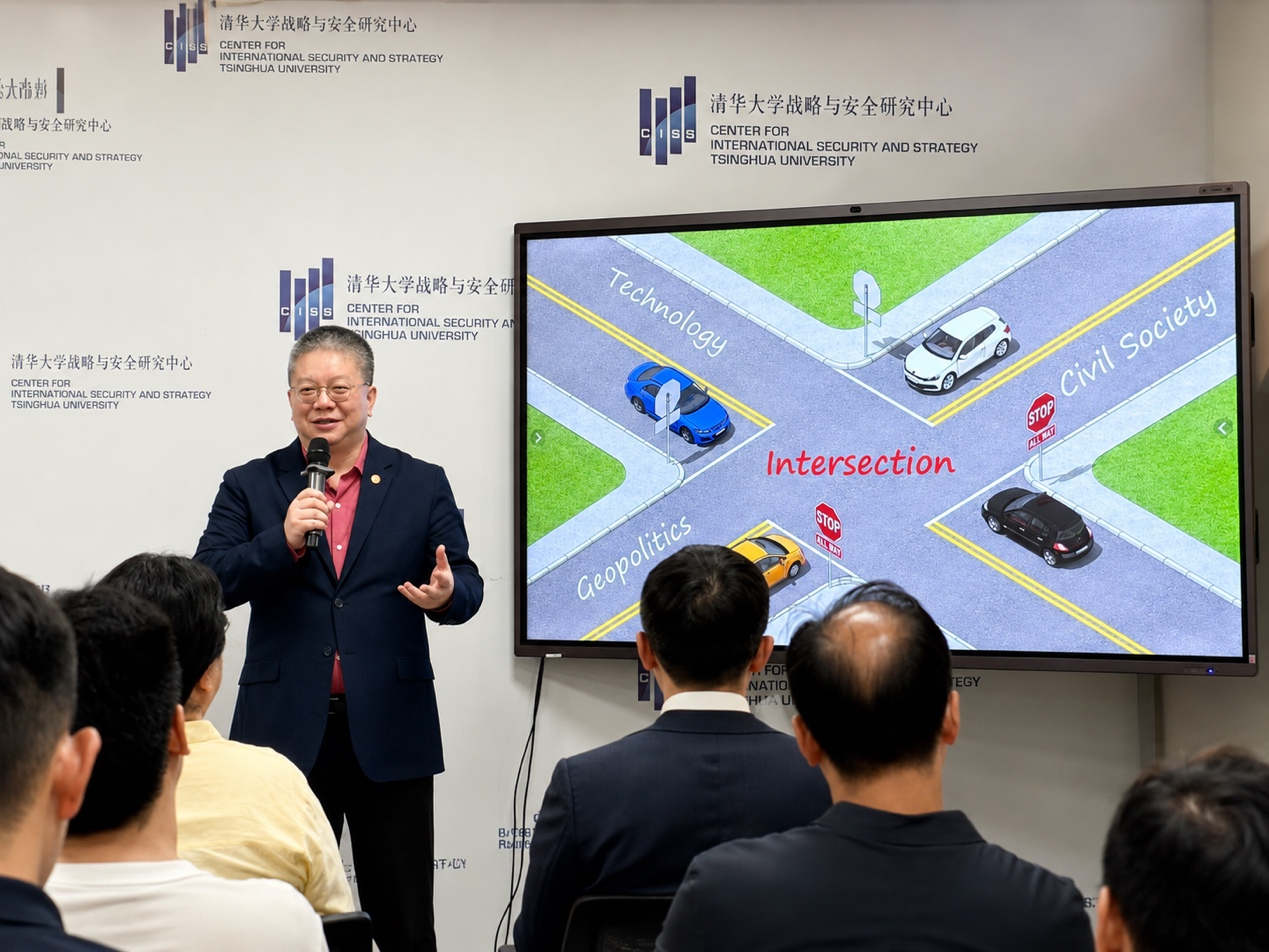
George Chen argued that the advent of the AI era has fundamentally reshaped the meaning of infrastructure. Data centers are no longer merely the "homes" of AI systems, but the essential foundation supporting computing power, model training, and the future expansion of AI applications. Examining the global distribution of data centers, he analyzed how factors such as electricity reliability, the availability of clean energy, climate conditions, regulatory environments, and geopolitical risks jointly shape decisions on data center location and development. Drawing on examples from Singapore, Taiwan, the Middle East, and the United States, Chen emphasized that competition in AI extends well beyond chips and foundation models. Instead, it has become a systemic competition involving energy supply, capital, digital infrastructure, governance capacity, and geopolitics. A stable, sufficient, and affordable electricity supply, he noted, has become a critical determinant of national AI capabilities. Data centers are no longer simply technological facilities or commercial assets; they have evolved into strategic resources closely linked to digital sovereignty, critical infrastructure security, industrial competitiveness, and the evolving international landscape. A country's ability to independently develop and securely operate digital infrastructure will play a decisive role in shaping its competitiveness in the AI era.
As the discussant, Yu Xiang responded by placing China-U.S. competition in artificial intelligence within a broader framework encompassing energy supply, institutional coordination, industrial organization, and governance capacity. He also emphasized that AI's impact on employment, social welfare, and public governance should become key priorities for future academic research and policy discussions.
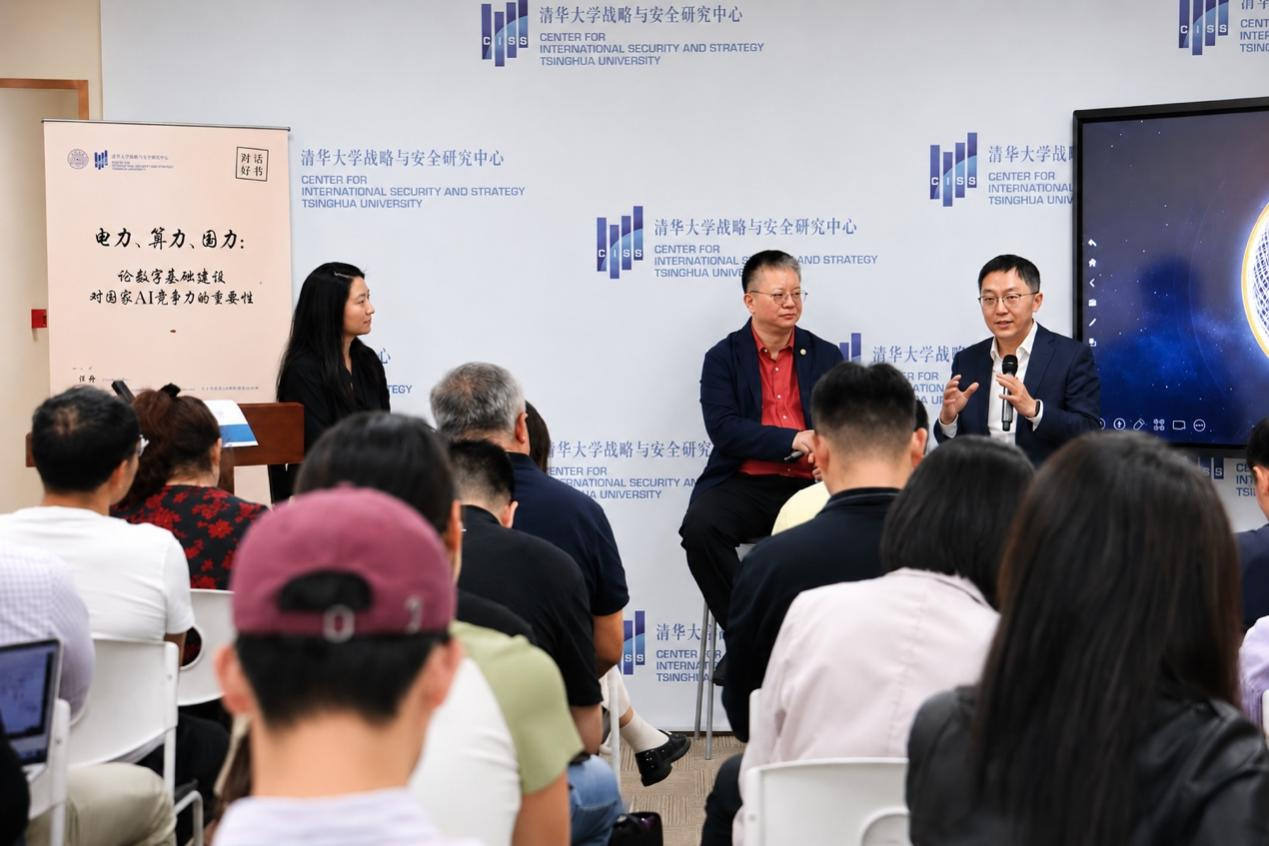
During the Q&A session, participants raised questions on a wide range of issues, including the global expansion of Chinese AI services, potential regulatory responses from Europe and the United States, the U.S. energy mix and coal policy, whether data centers could emerge as a new arena of geopolitical competition, data sovereignty and digital colonialism, the role of tokens in the AI economy, the relationship between clean and fossil energy, the influence of U.S. local politics on AI infrastructure development, whether Gulf countries can transform their energy resources into advantages in computing power, and whether open-source AI models could give rise to new forms of market concentration. The keynote speaker and discussant responded to each question in turn, leading to a lively and engaging discussion.