On June 12, 2026, Dong Ting, Associate Research Fellow at the Center for International Security and Strategy (CISS), Tsinghua University, was invited to Macau to attend the 12th China–Portugal Infrastructure Cooperation Forum, jointly organized by the Permanent Secretariat of the Forum for Economic and Trade Cooperation between China and Portuguese-speaking Countries (Macao) and the China Communications and Transportation Association, with support from the China International Contractors Association.
forum was held during the 17th International Infrastructure Investment and Construction Forum & Exhibition. Under the theme “AI Empowering High-Quality and Efficient China–Portuguese Infrastructure Cooperation,” it explored the deep integration of artificial intelligence across the entire lifecycle of infrastructure development—including planning and design, construction, operation and maintenance, safety management, and green transformation—aiming to promote high-quality development of China–Portuguese-speaking countries infrastructure cooperation toward smarter, greener, and more digital directions.
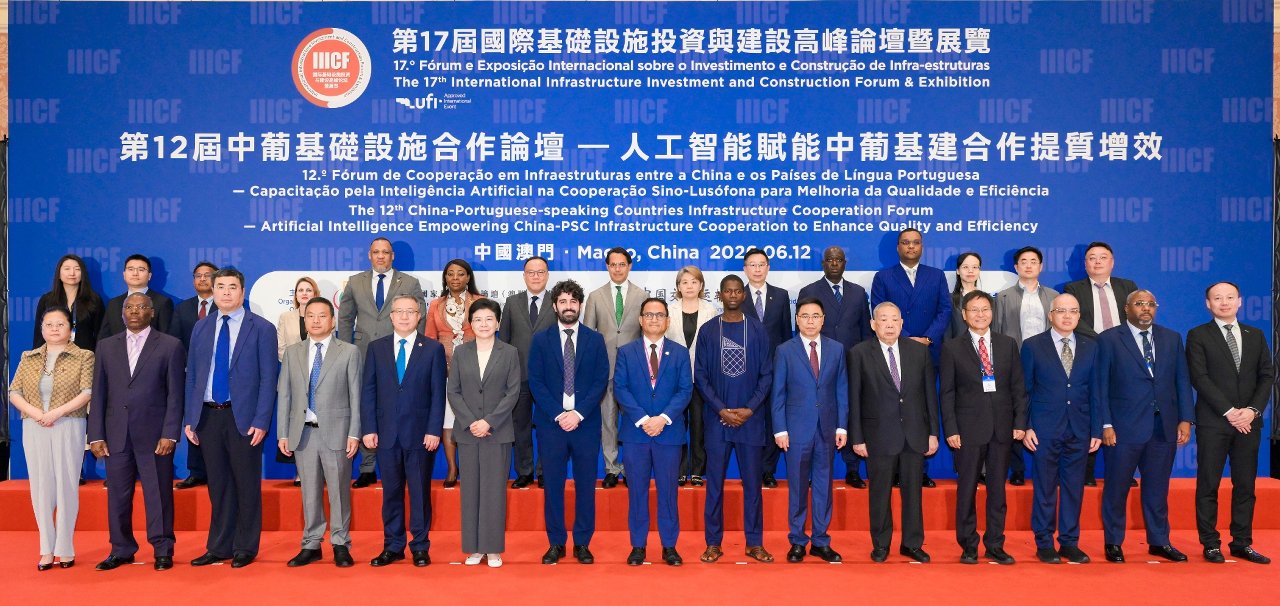
The Secretary-General of the Permanent Secretariat of the China–Portugal Forum, Ji Xianzheng; President of the China International Contractors Association, Fang Qiuchen; Vice Chairperson of the Jiangsu Provincial CPPCC, Han Liming; and Vice President of the China Communications and Transportation Association, Fang Haixian, delivered speeches in turn.
More than 120 participants attended the forum, including representatives from relevant government departments in mainland China and Macao, officials and consular representatives from Portuguese-speaking countries, enterprises from China, Portuguese-speaking countries and Macao, as well as all members of the Permanent Secretariat of the China–Portugal Forum.
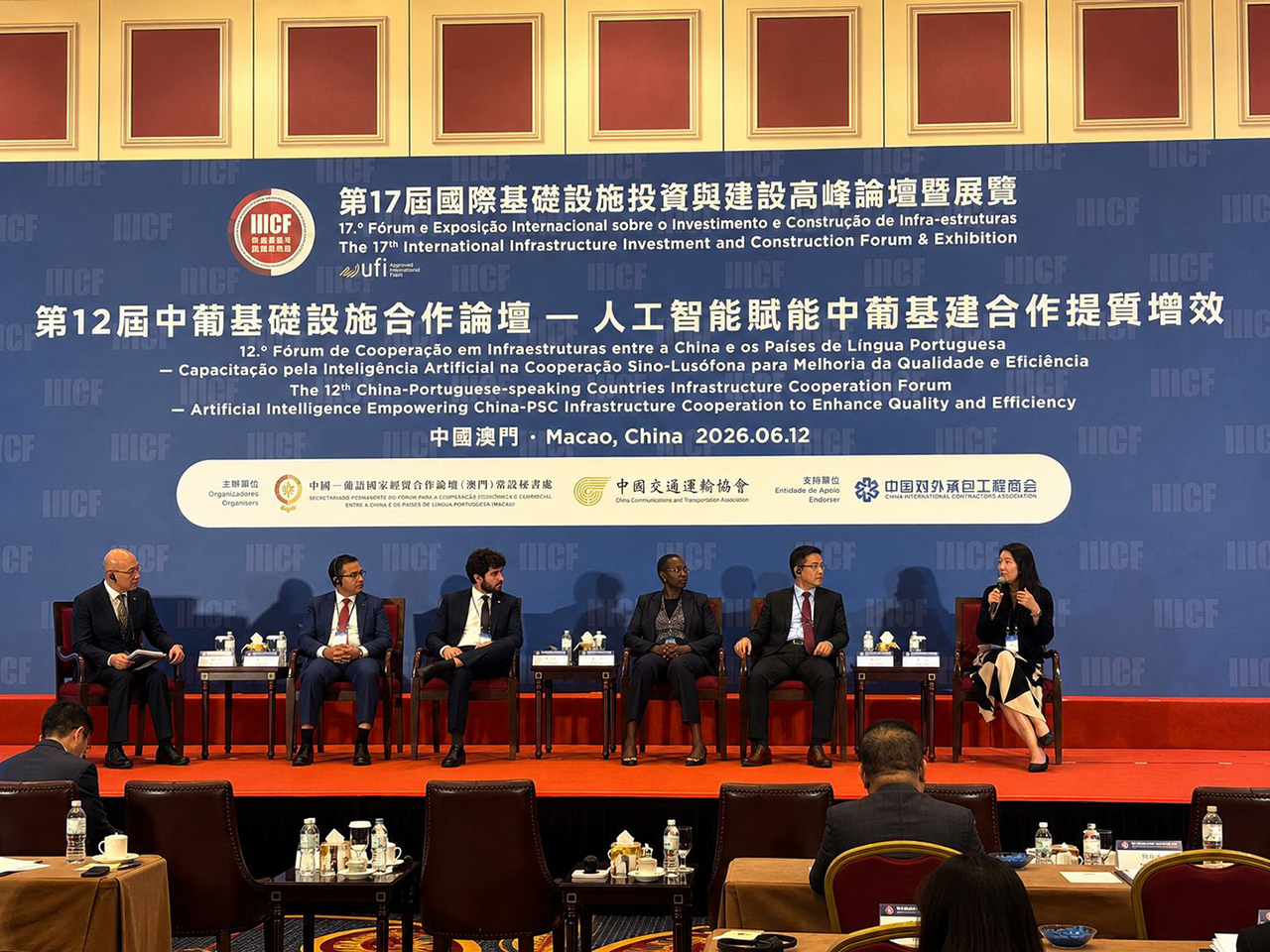
Dong Ting shared her views and responded to questions during the first thematic panel discussion titled “New Opportunities for China–Portuguese Infrastructure Cooperation under the Development of AI.” She argued that in the era of artificial intelligence, a country’s technological strength increasingly depends on its ability to integrate electricity, computing power, and data into a coordinated system. The new opportunity for China–Portuguese cooperation lies in treating previously separate, individually developed projects as part of a unified system for overall planning.
The session was moderated by Tang Jizong, Secretary-General of the China–Portuguese Cooperation Research Alliance. Other participants included Francisco Monteiro, Minister of Petroleum and Mineral Resources of Timor-Leste; Rodrigo Ferreira, General Coordinator of the Subsecretariat for Development and Planning of Brazil’s Ministry of Transport; Amadou Dabo, Director of Studies and New Projects at Guinea-Bissau’s Ministry of Public Works, Housing and Urban Planning; and Cao Zhenwu, General Manager of Zhongteng Weiwang (Beijing) Technology Co., Ltd.
The discussion featured in-depth exchanges on how Portuguese-speaking countries can leverage AI empowerment and China’s leading technologies to inject new momentum into sustainable infrastructure development. Participants also shared forward-looking insights on the intelligent upgrading of traditional sectors such as ports, energy, and transportation.