
On February 6th, the United States and Iran held indirect negotiations in Muscat, the capital of Oman. The U.S. side was led by Middle East Envoy Witkoff and Trump’s son-in-law Kushner, while the Iranian side was headed by Foreign Minister Araghchi. Intriguingly, unlike previous negotiations, General Cooper, the highest-ranking military commander in the region as head of U.S. Central Command, participated as a member of the U.S. delegation. Why have these Oman negotiations garnered such global attention? What are the historical roots surrounding the nuclear issue, and what are the prospects for these talks? This article attempts to provide answers.
I. What are the background and historical roots of the negotiations?
The current U.S.-Iran negotiations primarily revolve around the Iranian nuclear issue. For a long time, the nuclear issue has been the core crux of bilateral contradictions and a key variable affecting the security situation in the Middle East. Iran views the possession of nuclear capability as a symbol of national strength. Starting in the 1950s, Iran developed nuclear technology with help from Western countries such as the U.S., Germany, and France. On March 5, 1957, representatives from the U.S. and Iran signed an agreement in Tehran regarding cooperation in research and the peaceful use of atomic energy.
The dramatic turning point occurred with the outbreak of the Iranian Islamic Revolution in 1979. The newly established Islamic regime adopted an anti-American stance, and the U.S. Embassy hostage crisis in Tehran that same year led directly to the severance of diplomatic ties in 1980. This series of events marked the transformation of the two countries from strategic allies to adversaries, prompting the U.S. to adjust its stance on Iran’s nuclear policy and begin opposing Iran's development of nuclear technology.
▲The author, Wen Jing, has recently published a monograph titled Research on the Middle East Policy of the United States (2009-2017).
From 1979 to 2002, Iran was in the early stages of developing its nuclear program. On August 14, 2002, the opposition group "National Council of Resistance of Iran" (NCRI) claimed that Iran was conducting secret nuclear activities without the consent of the IAEA, including the establishment of nuclear facilities near Natanz and Arak. From then on, the Iranian nuclear program transformed into the "Iranian nuclear issue," becoming a focal point of international concern.
Beginning in 2002, the international community, represented by the IAEA, started a dialogue with Iran. On February 4, 2006, a special meeting of the IAEA Board of Governors referred the issue to the UN Security Council. The resolution deemed it "necessary for Iran" to suspend its enrichment-related activities and reconsider the construction of the Arak heavy water reactor. On June 6, the U.S., UK, Russia, China, France, and Germany (the P5+1) proposed a framework agreement to Iran, encouraging it to indefinitely halt its uranium enrichment program. By this point, the U.S. had become a primary party to the issue, and the nuclear problem began to evolve into a critical friction point in U.S.-Iran relations.
On July 14, 2015, under the leadership of Obama, the U.S., alongside China, France, the UK, Russia, and Germany, reached a political understanding with Iran on key issues of a comprehensive long-term agreement, signing the Joint Comprehensive Plan of Action (JCPOA). From a diplomatic perspective, the JCPOA represented a rare rebuilding of trust during the Obama administration. However, this fragile foundation was soon shattered. In 2018, the Trump administration unilaterally withdrew from the JCPOA and reinstated economic sanctions, attempting to force concessions through a "maximum pressure" policy. It can be said that the unilateral U.S. withdrawal fundamentally shook the institutional credibility of negotiations, serving as a major historical root of the current diplomatic stalemate.
II. Why have the Oman negotiations become a global focus?
There are three main reasons why the current U.S.-Iran talks in Oman have attracted global attention. First, the tension between the U.S. and Iran has reached a breaking point. Relations have long been in a state of high confrontation. During the "12-Day Iran-Israel War" last June, the U.S. used B-2 bombers and over 30 Tomahawk missiles to strike three major Iranian nuclear bases in Fordow, Isfahan, and Natanz, escalating the conflict from a regional dispute between Iran and Israel to a direct military strike by the U.S. as an external power. In December last year, large-scale protests broke out in Iran due to rising prices and currency devaluation, turning into riots in some areas and resulting in significant casualties. The U.S. continued to pressure Iran, with Trump announcing the deployment of carrier strike groups to the waters surrounding Iran, and the State Department issuing a "security warning" urging U.S. citizens to leave Iran immediately. Relations reached a hair-trigger state.
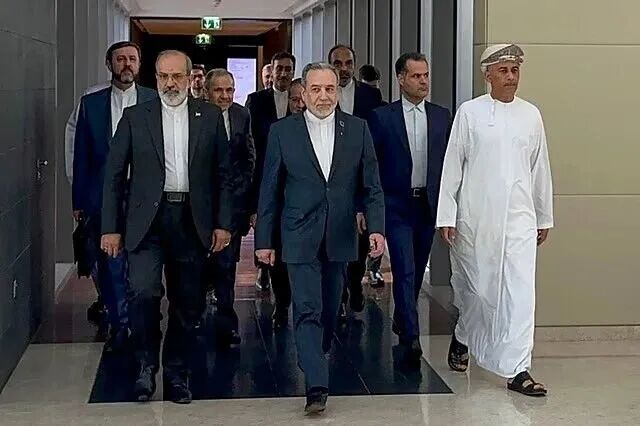
▲On February 6, a delegation led by Iranian Foreign Minister Araqchi arrived in Oman to negotiate with the United States.
Second, Oman’s role as a neutral mediator. Oman has frequently acted as a "bridge" in U.S.-Iran diplomatic history. In 2025, under Omani mediation, the two sides held five rounds of indirect talks on the nuclear issue, though core differences remained unresolved: the U.S. demanded a total abandonment of enrichment, while Iran maintained its inalienable right to peaceful nuclear energy. Negotiations were interrupted following the outbreak of the 12-Day Iran-Israel War. Before the current talks, White House Press Secretary Leavitt mentioned that the meeting was originally scheduled for Turkey but moved to Oman. This was primarily because Iran trusts Oman’s neutrality more; while Turkey is a major regional player, its involvement might have introduced unwanted issues and audiences, complicating the environment.
Third, the determination of core issues. The most critical aspect drawing attention is what is being discussed—how the two sides define the core agenda. The U.S. wants the agenda to include limiting nuclear proliferation and Iran ceasing support for regional groups like Hamas, Hezbollah, and the Houthis. Conversely, Iran’s core concerns are the removal of all U.S. sanctions and the resolution of the nuclear file. While the U.S. believes Iran should not engage in any uranium enrichment, Iran insists on its right to use nuclear energy peacefully.
III. What lies ahead?
The current Muscat negotiations have transcended the traditional scope of the nuclear issue, impacting the very prospects of war and peace in the Middle East. According to the latest public information, the talks have "temporarily" concluded, and representatives have returned to their respective countries. A statement indicated that the talks focused on creating suitable conditions for resuming diplomatic and technical negotiations, but no substantive agreement was reached.
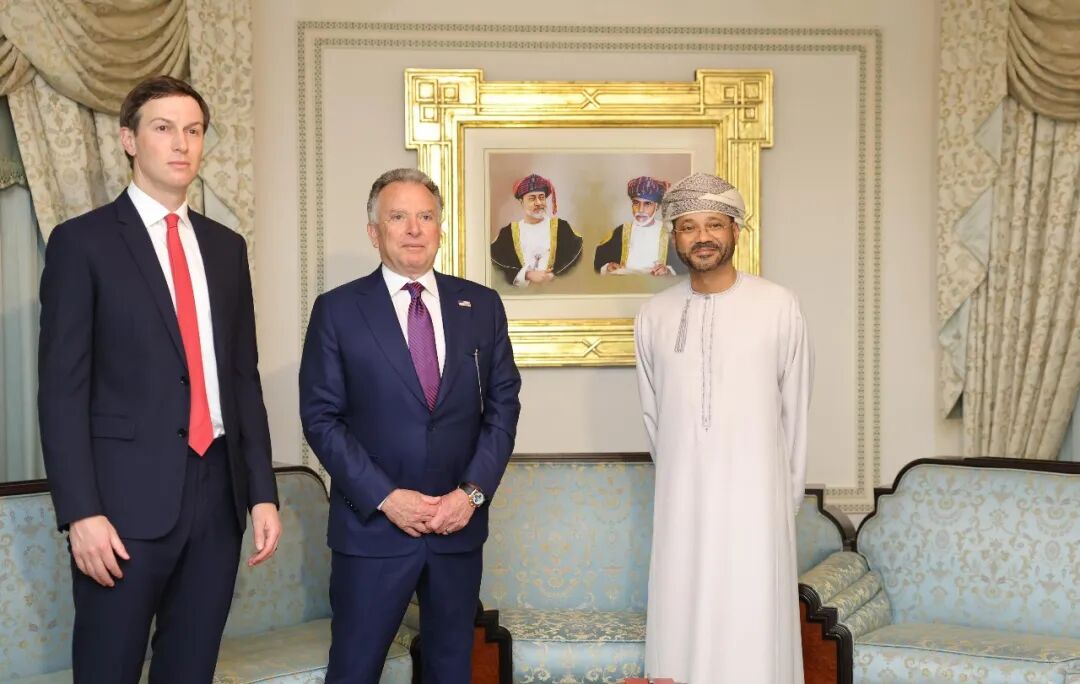
▲On February 6, U.S. Presidential Envoy Witkov and Trump's son-in-law Jared Kushner met with Omani Foreign Minister Badr.
In essence, these talks possess distinct "temporary" and "crisis management" characteristics. They are not a gradual, institutionalized process planned over the long term, but rather an emergency diplomatic attempt forced by escalating confrontation. Frequent hardline signals from the U.S., including public assertions that military action is not ruled out, have tightened the regional security atmosphere. Under these circumstances, the negotiation is closer to a "damage control" action to avoid an uncontrolled conflict, rather than a true reshaping of the relationship.
Significantly, on the same day as the negotiations, the U.S. State Department announced sanctions on multiple entities, individuals, and tankers linked to Iranian oil trade to crack down on "illicit oil traders" and "shadow fleets." This move demonstrates that the U.S. has not paused its pressure tools during negotiations, continuing a dual-track strategy of "dialogue alongside sanctions." The future of U.S.-Iran relations remains full of uncertainty, yet continued dialogue remains the only rational choice to avoid a catastrophic conflict.