From September 7 to 8, 2026, Wen Jing, Postdoctoral Fellow at the Center for International Security and Strategy (CISS), Tsinghua University, and Director of Media and Communications for the China Forum, was invited to Abu Dhabi, United Arab Emirates, to attend the third Hili Forum, co-hosted by the Emirates Center for Strategic Studies and Research (ECSSR) and the Anwar Gargash Diplomatic Academy (AGDA).
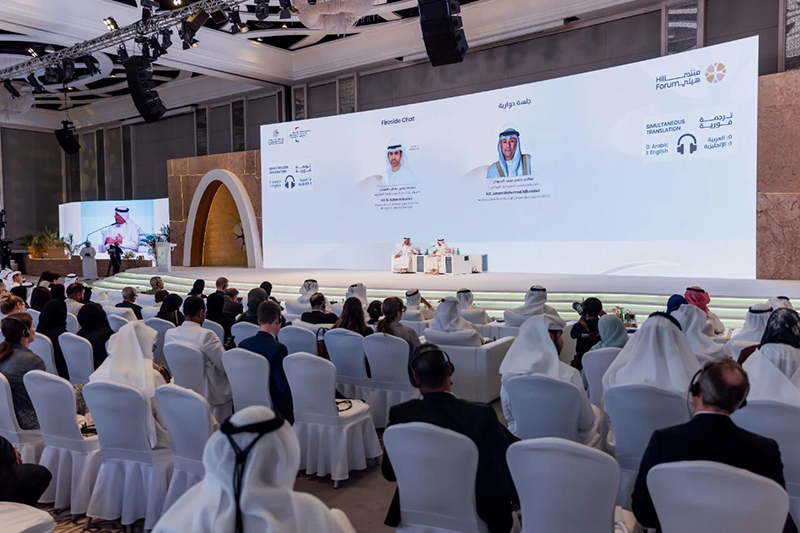
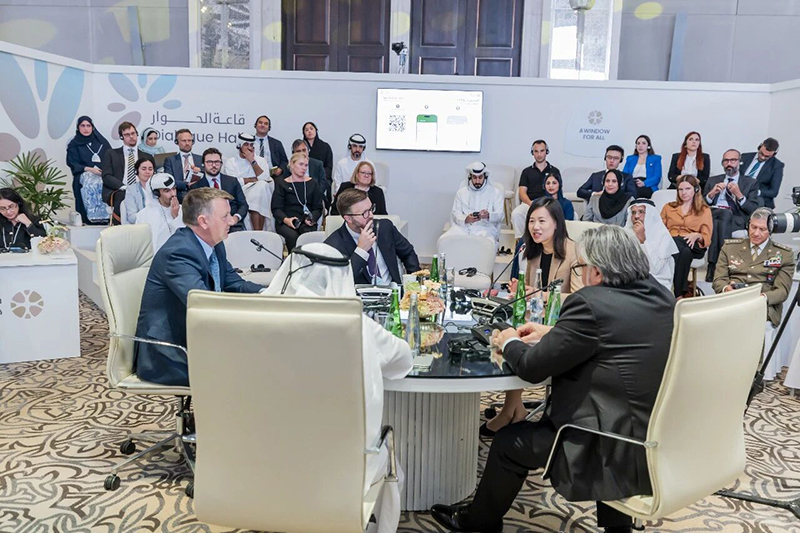
Held under the theme “Gulf at Crossroads: Conflict, Consequences and Course Correction,” the forum focused on emerging geopolitical, economic and technological developments in the Gulf following the latest round of U.S.-Israeli-Iranian conflict. The forum brought together senior political figures, diplomats, scholars from leading international think tanks, and executives from multinational technology companies from more than 35 countries. Participants engaged in more than 20 thematic dialogues on key issues including the reshaping of the post-conflict Gulf order, the security of the Strait of Hormuz, the strategic autonomy of Gulf states, and the role of small and middle powers in the emerging international order.
During the forum, Wen Jing was invited to participate in the parallel session on “Great-Power Competition and Multilateralism,” moderated by Robert Mason, Associate Professor at the Anwar Gargash Diplomatic Academy. The session also featured Mohammed Baharoon, Director-General of the Dubai Public Policy Research Center; Anthony Bubalo, Director of the Asia Society Australia; and Grant Rumley, Senior Fellow and Director of the Diane and Guilford Glazer Foundation Program on Great Power Competition and the Middle East at The Washington Institute for Near East Policy
Wen Jing shared her views on the profound transformation of patterns of international cooperation under great-power competition. She argued that great-power competition is driving a shift from rigid alliance structures toward more flexible and networked forms of partnership. During the Cold War, countries could be more clearly divided into opposing blocs. Today, however, traditional approaches are no longer sufficient for defining alliances. Instead, partnerships can form around specific issues, giving rise to new forms of cooperation.
During the forum, Wen Jing also participated in a number of thematic discussions on the Gulf security architecture, the transformation of the region’s geoeconomic role, and the reshaping of the digital order driven by artificial intelligence and other emerging technologies.
She also exchanged views with government representatives and policy practitioners from the UAE Ministry of Foreign Affairs, the Emirates Center for Strategic Studies and Research, the Washington Institute for Near East Policy, and other institutions in Europe, the United States, and the Middle East, as well as representatives of local technology institutions and companies in the Middle East.


 2026-09-11