Cn
Research
2021-11-12 | YU Xiang
The US Federal Reserve has just released its bi-annual financial stability report, in which it picked up "stresses in China's real estate sector which could strain the Chinese financial system, with possible spillovers to the US," rendering it an economic threat for US.
2021-11-08 | DA Wei
China-U.S. relations, which deteriorated steadily after the Trump administration launched it so-called trade war in May 2018 and have been stagnant since Biden's inauguration in January, have finally shown some positive momentum. The release of Huawei executive Meng Wanzhou pulled out a painful thorn. Ranking diplomats of the two countries held fruitful talks in Zurich, and trade, climate and military teams have begun reestablish contact. Most important, presidents Xi Jinping and Joe Biden are expected to meet virtually by the end of this year, according to the American side. The question now is how far Beijing and Washington will go, and in what direction.
2021-11-07 | ZHAO Minghao
In America’s script for strategic competition with China, the United Nations plays a key role. In a departure from the Trump administration, President Joe Biden and the Democratic Party elite place greater emphasis on understanding the challenges posed by China in the context of the international system, in particular the U.S.-China rivalry in affairs related to the UN. Some U.S. experts suggest that Beijing is stepping up its efforts to shape a “UN with Chinese characteristics.” Hence, the UN is becoming one of the main battlegrounds for the U.S. against China, a phenomenon that threatens to further destabilize the international system.
2021-10-22 | YU Xiang
Against the backdrop of a high inflation crisis, a serious supply chain tension has become an acute issue in the US with a swath of cargo ships stranded in ports while Americans may face empty shelves on the cusp of the holiday season. So it's not surprising that Transportation Secretary Pete Buttigieg predicted during a recent CNN interview that supply chain issues will continue into next year. Citing reasons of an imbalance between supply and demand, as well as infrastructure problems, Buttigieg also took the chance to push the Biden administration's infrastructure spending bill which has stalled in House of Representatives and faces significant surgery if there is any chance of becoming law.
2021-10-15 | SUN Chenghao
On Oct. 6, Yang Jiechi, a member of the Political Bureau of the Communist Party of China Central Committee, met with U.S. National Security Adviser Jake Sullivan in Zurich, Switzerland — another strategic engagement following the phone call between Chinese and U.S. heads-of-state on Sept. 10.
2021-10-04 | SUN Chenghao
During the White House tenure of Donald Trump, the U.S. made significant adjustments to its transatlantic policy, leaving Europe to struggle with the changes. The two sides had big differences on economy, trade, security and global governance, precipitating moments of grave turbulence. After the inauguration of Joe Biden, America’s European policy gradually returned to normal, ushering in some constructive changes in transatlantic relations. Now it seems the U.S. and Europe are embracing on a new honeymoon.
2021-10-04 | ZHAO Minghao
Recently, both U.S. President Joe Biden and Chinese President Xi Jinping spoke during the general debate at the 76th session of the United Nations General Assembly, offering their insights on the key challenges and issues facing the world. For sure, both leaders’ speeches were well thought-out, providing their own visions of the international order.
2021-10-04 | AN Gang
On Sept. 10, the presidents of China and the United States had their second phone call since Joe Biden took office, signaling that the two sides will stabilize bilateral relations. The key remark of President Xi Jinping during the call was that “the China-U.S. relationship is not a multiple-choice question of whether we should have good relations, but a compulsory question of how” — to which President Biden responded that the two countries had no interest in letting competition veer into conflict.
2021-09-29 |
The dust from the Afghan war has yet to settle but the fallout is clear. With the ending of the US global crusade on terrorism, the prelude to President Joe Biden’s “extreme competition” with China has begun. The question is: how long will it last?
2021-09-29 | Sun Chenghao
Chinese President Xi Jinping recently took a phone call from his U.S. counterpart, Joseph Biden — their second since Biden took office. The two leaders had extensive, candid, in-depth dialogue on China-U.S. relations and issues of mutual interest. Although uncertainties remain in bilateral relations, this phone call sent four significant signals.
2021-09-20 |
Chinese President Xi Jinping recently took a phone call from his U.S. counterpart, Joseph Biden — their second since Biden took office. The two leaders had extensive, candid, in-depth dialogue on China-U.S. relations and issues of mutual interest. Although uncertainties remain in bilateral relations, this phone call sent four significant signals.
2021-08-27 |
More legislative documents concerning China have passed through Capitol Hill offices in recent months than ever before, mostly suggesting countering or restrictive policies on China and the Chinese people.
2021-08-25 |
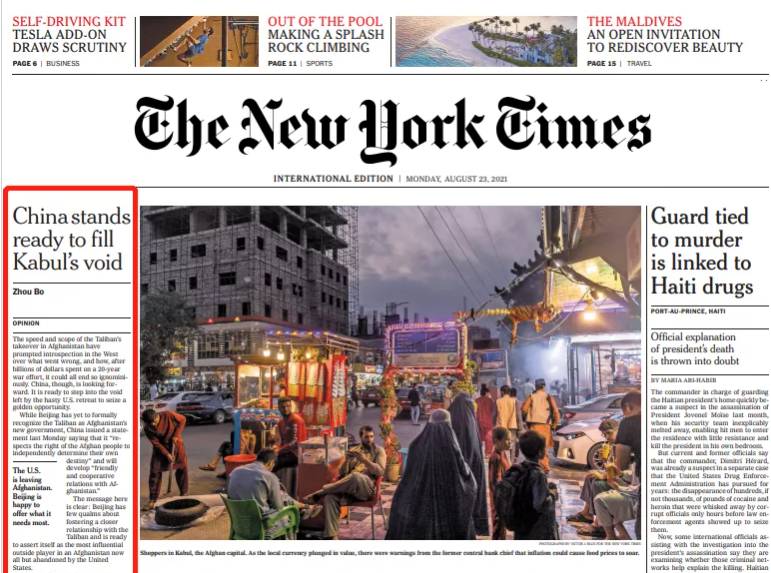
The speed and scope of the Taliban’s takeover in Afghanistan have prompted introspection in the West over what went wrong, and how, after billions of dollars spent on a 20-year war effort, it could all end so ignominiously. China, though, is looking forward. It is ready to step into the void left by the hasty U.S. retreat to seize a golden opportunity.
2021-07-30 |
Chancellor of the German Reich Otto von Bismarck famously said, “Laws are like sausages, it is better not to see them being made”. In this regard, the UN Convention on the Law of the Sea (UNCLOS) looks like the longest sausage ever made. It was negotiated for nine years by around 140 countries, making it the longest-running international law negotiation in history. Understandably, compromises are made and ambiguities that could be flexibly interpreted still found.
2021-07-07 |
Much has been said about the so-called Wolf Warrior diplomacy. Rhetoric aside, the real issue isChinese victimhood over the “century of humiliation” that started with the 1840 opium war.
2021-06-29 |
In late May at an event hosted by Stanford University, U.S. President Joe Biden’s Asia czar Kurt Campbell said the period broadly described as engagement had come to an end. Obviously, the old strategic framework, which lasted four decades after China and the United States established diplomatic relations, is falling apart, while a new one has yet to be developed. Both China and the United States are consequential major powers; thus undoubtedly the state and nature of the bilateral relationship will be influential not only for the two countries but for others as well. It is very likely the coming four years will be a defining moment for the trajectory of the relationship. How China and the United States engage with each other over such specific issues as trade disputes, ideological troubles and military relations, is very important. However, the answers to the following three questions will be critical and ultimately defining:
2021-06-21 |
One year has passed since a deadly brawl between Chinese and Indian troops in the Galwan Valley in the China-Indian border areas, which resulted in the death of 20 Indian soldiers and four Chinese troops. The aftermath is still being felt today.
2021-06-04 |
The continuous deterioration of China-U.S. relations in recent years has gone beyond what many people might have anticipated. The American Chamber of Commerce in China’s white paper, 2021 American Business in China, mentioned that most of its members identified “tensions in China-U.S. relations” as their foremost challenge for business operations in China. Indeed, China-U.S. ties are at a crucial moment in history. Owing to the rising strategic mutual suspicion and growing prominence of structural differences, the two sides face an important choice: They can either slide into confrontation and conflict or engage in benign competition.
2021-05-15 |
India and the United States have been part of the chorus chanting about the “free and open Indo-Pacific” in recent years, but they are not birds of a feather flocking together. The decision to challenge India’s EEZ suggests that Washington does not consider millions of square kilometres of water in the Indian Ocean “free and open”.
2021-05-10 |
Multilateralism, as we in China understand it, is about seeking consensus through consultation and manage common affairs through cooperation for shared benefits and win-win results. In this sense, China and Europe share a common interest in upholding multilateralism.
2021-05-01 |
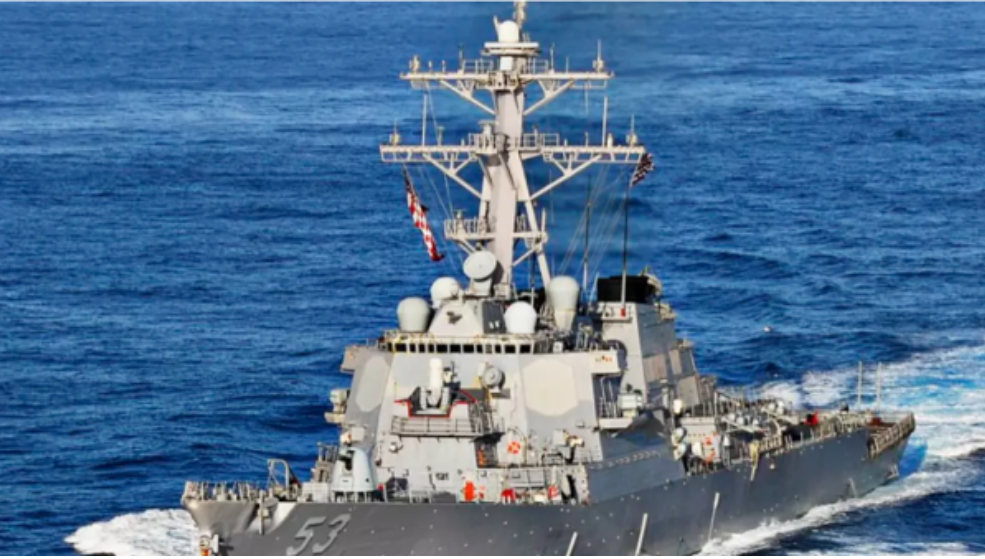
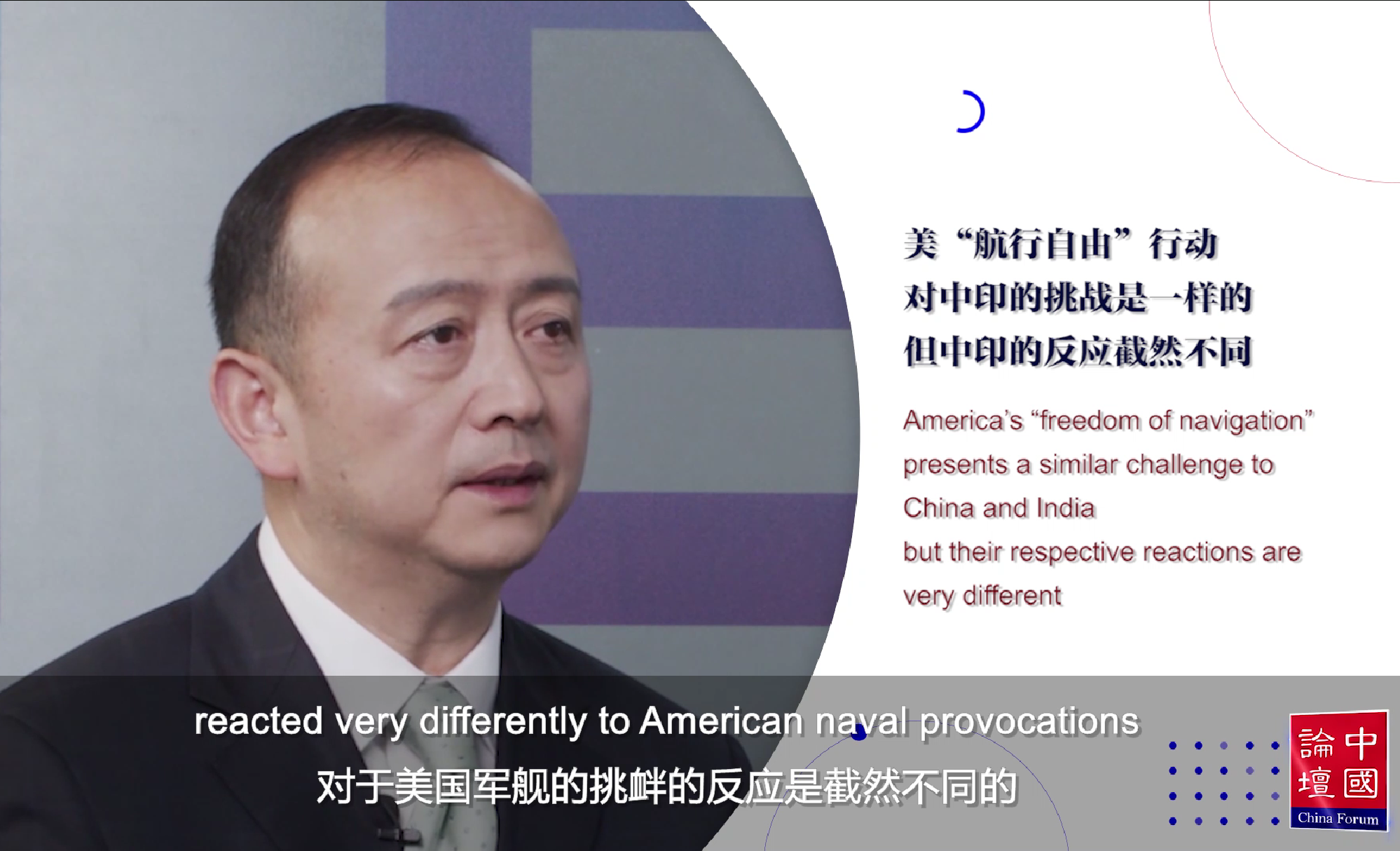
A U.S. Navy ship entered the India’s Exclusive Economic Zone (EEZ) in less than a month after the Quad summit between the leaders of the United States, India, Japan and Australia. Its Seventh Fleet even hyped a special statement. On the other hand, the U.S. refused to comment on lifting ban on COVID-19 vaccine raw materials export to India, making the epidemic crisis even worse in India . When the U.S. is in great need of India's help to confront with China, however India is confused by those unreasonable actions. Does a free and open Indo-Pacific reveal unlikely bedfellows between the U.S. and the India? What is the future of India being a "quasi alliance" of the U.S.? In response to the above problems, China Forum interviewed Zhou Bo, Senior Fellow, CISS, Tsinghua University, Director of the Centre for Security and China Forum expert.

219 messages 1 2 3 4 5 6 7 8 9 10 11 Go Page

217 Mingzhai, Tsinghua University, Haidian District, Beijing, China (100084)