Reflections of the Leading Minds:Ending the Great North Eurasian War— The Charter International System, Great-Power Comity, and the Meso Path to Peace
[Column Introduction]
"Reflections of the Leading Minds" is a spin-off column of the "Conversation with the Leading Minds" series hosted by the Center for International Security and Strategy (CISS) at Tsinghua University. It aims to introduce to readers the profound insights expressed by scholars participating in the CISS "Conversation with the Leading Minds" events. This column strives to present the main viewpoints of relevant scholars as completely as possible, though this does not imply that CISS and its researchers endorse or support these views.
[Editor's Note]
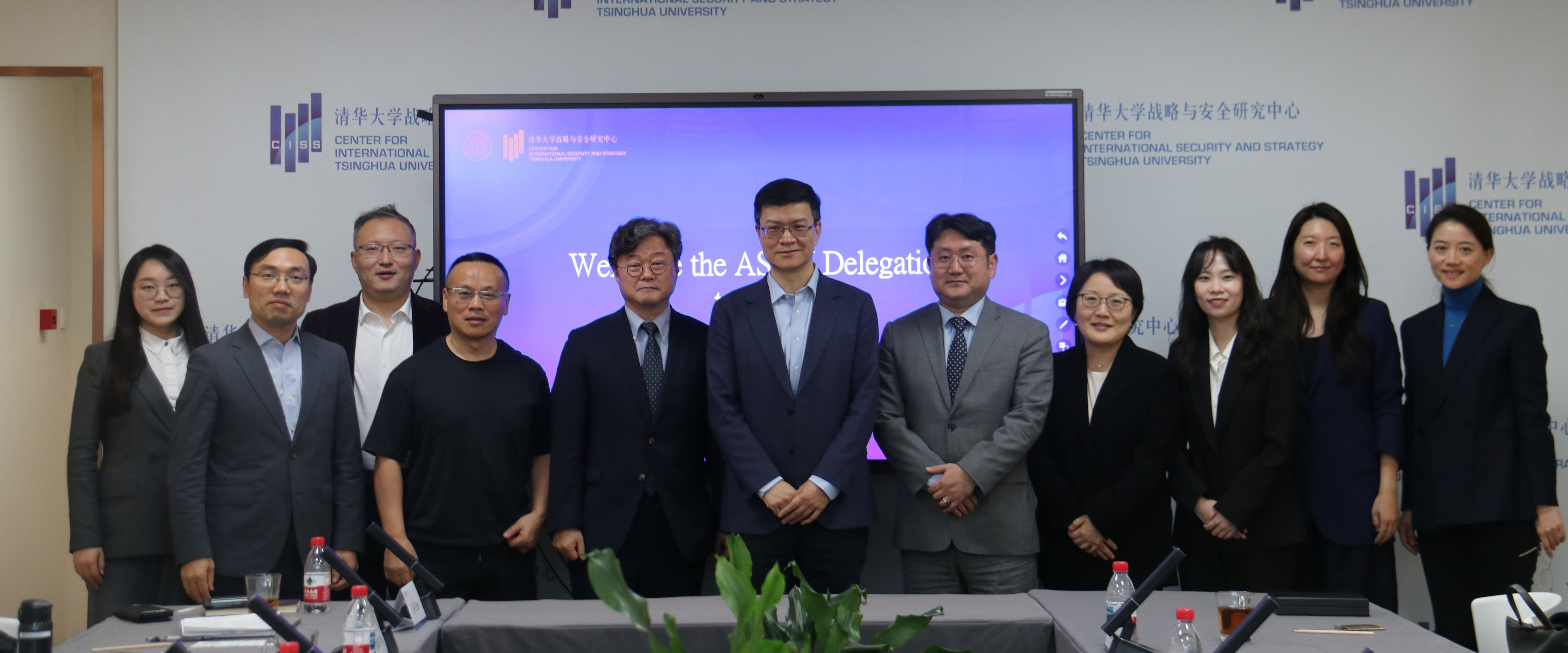
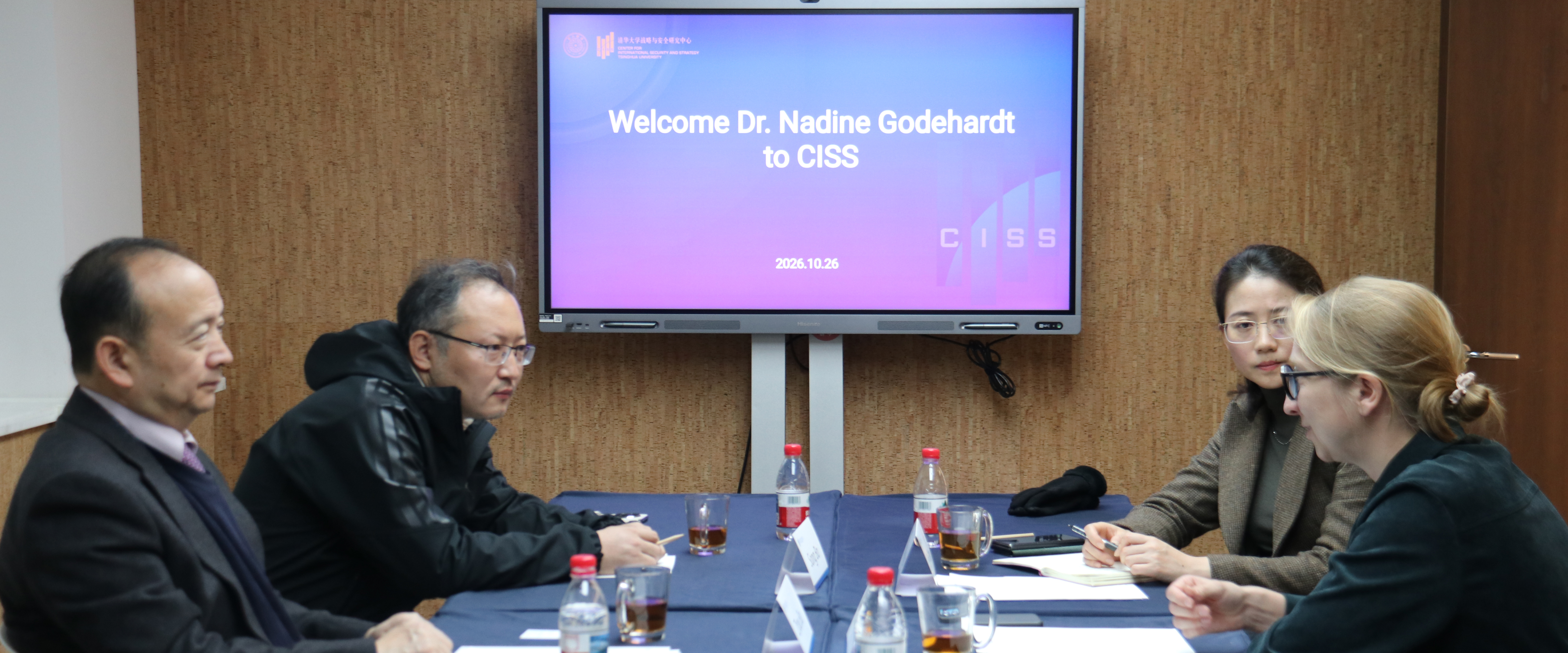
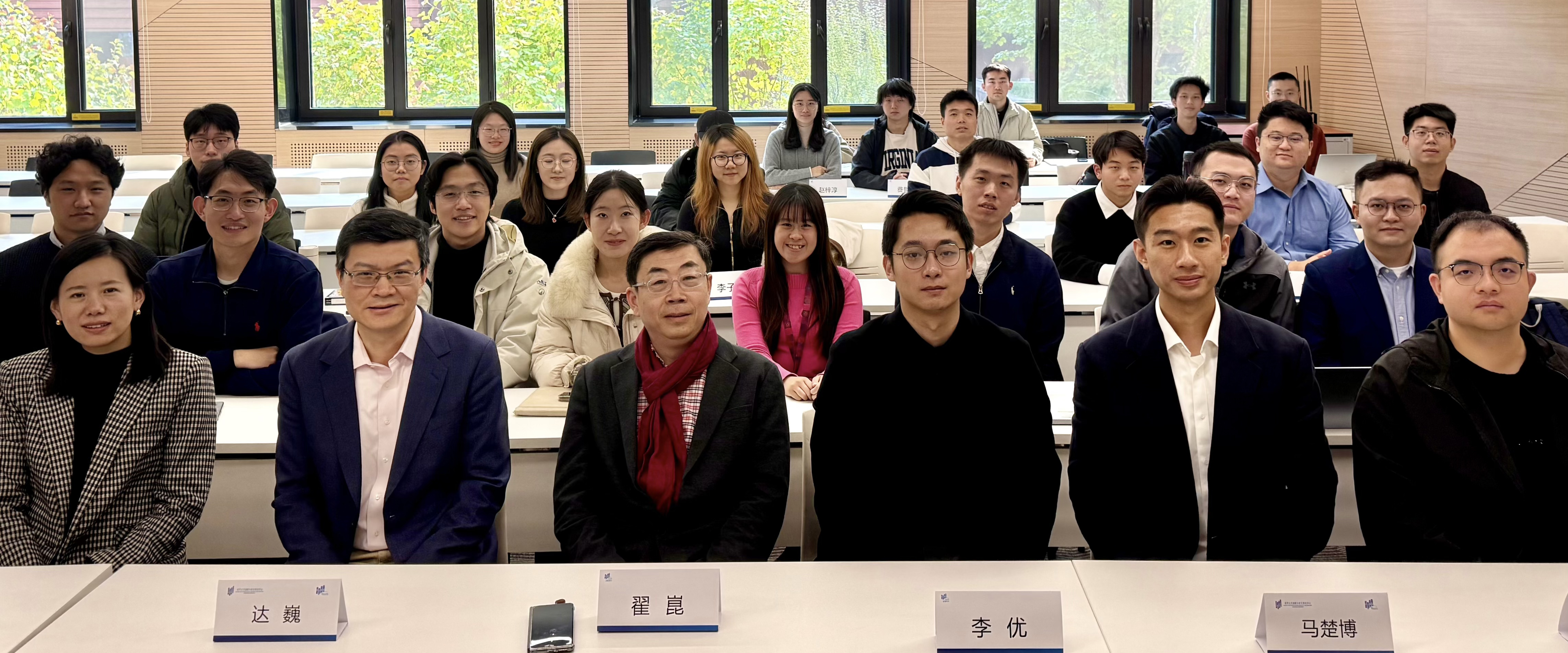
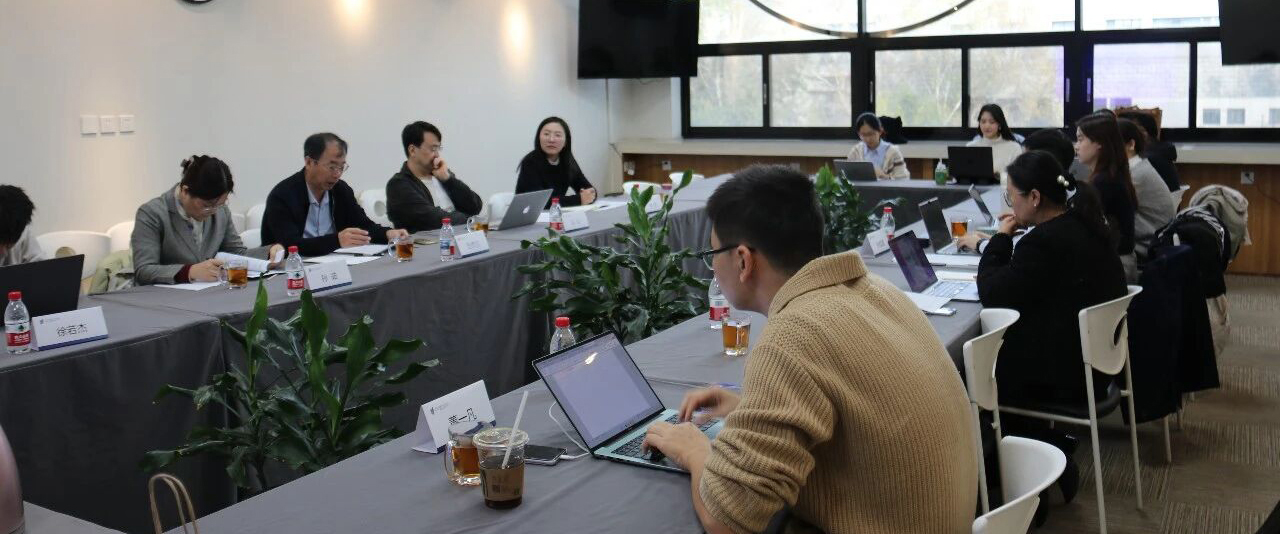
The Russia-Ukraine conflict has now entered its fifth year. This protracted and brutal conflict has profoundly impacted the international order and international relations theory, inspiring continuous and deep reflection among international scholars. On October 29, 2026, Richard Sakwa, Emeritus Professor of Politics at the University of Kent in the UK, participated in a "Conversation with the Leading Minds" event hosted by the Center for International Security and Strategy (CISS) at Tsinghua University under the theme "Who Can End the Conflict? Major Powers and the Path to Peace in Eurasia." During the event, he systematically elaborated his reflections on how to bring the Russia-Ukraine conflict to an end. He explicitly proposed building a "comity of great powers" and establishing a viable path to ending the conflict within the framework of the UN Charter system, while also addressing related key questions. This article was compiled by Song Bo, Assistant Research Fellow at the Center for International Security and Strategy, Tsinghua University.
Ending the Great North Eurasian War
The Charter International System, Great-Power Comity, and the Meso Path to Peace
Richard Sakwa
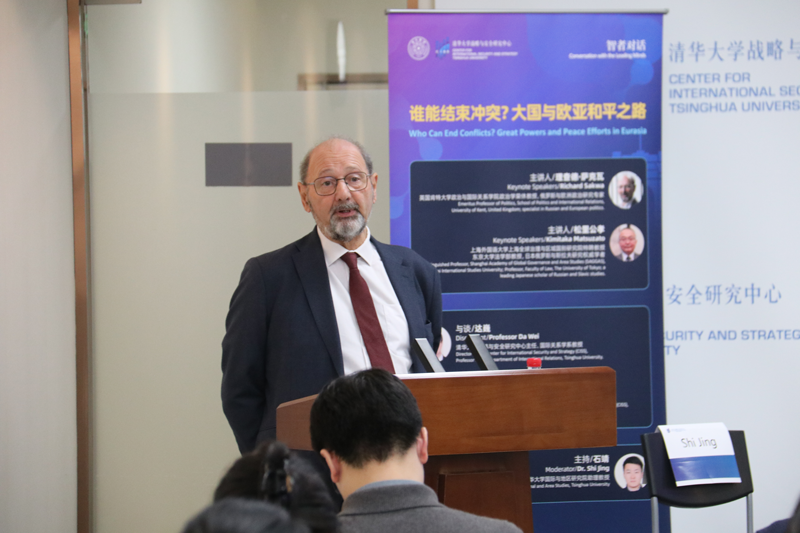
I welcome the topic before us today. The essential thing is the conversation itself, and its question—who can end conflict. It is a fundamental question, and we stand in the midst of it. To make sense of it, I begin with a broad contextualization of the war.
We are now in the fifth year of what I have begun to call the Third Great North Eurasian War. Whatever we call it, this is not a single conflict: it is more than a Western European war, more than an American war, more than a NATO war—it is a whole bundle of conflicts. Under that label I call it the Great North Eurasian War. Why the third? Because, in my view, it is the continuation of unresolved contradictions, of the failure to build a universal, inclusive and equitable peace order across the whole of northern Eurasia.
The first is the First World War, of 1914–1918, which drained Europe of its strength. The United Kingdom, too, was deeply bound up in it; we were still paying off the debt we incurred in the First World War until only a couple of decades ago, to say nothing of the Second World War, from which Europe never truly recovered. The First World War, of course, brought the European empires—the Austro-Hungarian, the Russian and others—to an end.
The Second World War, as we call it in the West, further marginalized Europe. It undermined the powers and their world-views, and from it emerged what I call the legacy great powers: the United Kingdom, France, Germany, Italy, Spain and others. The war brought the global empires to an end and saw the rise of the United States as a global power.
What of this third war? Some already call it the Third World War. The label is debated, with greater or lesser credibility, but it has distinctive features. It is a proxy war on many dimensions, between the United States and Europe, and it is increasingly becoming a European conflict. The reason to call it the North Eurasian War is that, as I have noted, the conflict runs all the way from Vladivostok to Lisbon, and indeed westward toward Alaska.
This war emerges from distinctive features of European civilization. I will not pursue this in depth, but figures such as Sergei Karaganov argue that it is a war arising from five hundred years of European civilization, five hundred years of European imperialism, colonialism and its endless wars. European modernity, in other words, is simply a modernity built on war, conflict and division.
There are, of course, many progressive elements in it, but I will not dwell on that side. I would note, in brackets as it were, that there are many Wests. One is the imperial and colonial West; before it there is a philosophical, deeper West, all existing simultaneously; and the one I will speak of in a moment is the political West.
What I want to say specifically is that this Third Great North Eurasian War emerges from the unresolved contradictions of the 1945 peace settlement. That settlement does not apply in the same way to Asia, and particularly not to China and these other questions; nevertheless, the 1945 settlement, like the Versailles settlement of 1919 after the First World War, turned out to be more of an armistice than a genuine, enduring, sustainable and legitimate peace order. It failed to build one.
This echoes the long-running discussions of the origins of the Cold War. Out of the Potsdam discussions it had become quite clear that there would be a unified, neutral, non-militarized Germany; within weeks after Potsdam the Western powers went back on this and moved toward what became the Cold War, the division of Germany, and all the conflicts arising from that very act of unresolved contradiction. These issues came to the fore at the time of German unification in 1990, with NATO enlargement, and the discussion continues to this day.
In other words, 1945 turned out to be no conclusion to the endemic European condition of war. It is an endemic condition, and European wars do not stay in Europe but encompass the globe; our failure to establish a peace order within Europe becomes global and draws in everyone, as we discuss these conflicts in Beijing today. The world wars and the Cold War began in Europe and then spread globally. One distinctive feature of this third North Eurasian war, unlike the Cold War—a distinctive type of conflict in the nuclear age—is that war has returned to Europe. We have long exported war; conflict and war are among our few remaining major export commodities, and this, I am afraid, is the latest one. To understand a conflict, we must understand where it begins and its origins.
Let us look more specifically at the contradictions of 1945. For this we need a fuller conceptualization of the idea of world order, and in this case the post-war world order. I have long argued that the concept of “post-war” applies only to Europe, and that the concept of world order is usually and correctly regarded as under-theorized. Today almost every newspaper, every day, speaks of a crisis of world order; yet what are we talking about? It is massively under-theorized. Henry Kissinger, in his magisterial works on diplomacy, never defined it; it was merely assumed that he had. I have modestly criticized him over the years for offering an enormous body of analysis while being unable to place his work within an order.
To understand this, let me put forward my view of how we should look at these things, drawing very briefly on English-school thinking. I belong to this English-school movement, a way of looking at the world very unlike the American international-relations model—a wholly different way of seeing it. International relations in the United States has often been treated as a purely American way of looking at the world; in China, in Japan and elsewhere it is viewed differently. This is a modified version drawing on Hedley Bull, Watson and others. Very briefly, what does this model look like?
We have an international system now. The one we have, established in 1945, is based on the United Nations; it is what I call the charter international system. It is genuinely international, because the Soviet Union contributed a great deal to its foundation. China was a founding member—something often and rightly emphasized: China is a founding member of this international system, part of the United Nations Declaration of January 1942, and now, of course, a permanent member of the Security Council.
What is this charter international system? I cannot go into all the details, but it builds on the Versailles system that failed, on the Vienna Congress system of 1815 with its concert of powers, on the Treaty of Utrecht that defined how diplomacy would work; and the foundation of it all is Westphalia in 1648, at the end of the Thirty Years’ War. Some of these were more European, until in 1945 we finally reached a genuinely international system, which endures to this day.
The question is whether the United Nations can survive. It is under enormous pressure today, yet I argue that it can and it must, because the United Nations rests on four fundamental elements, in the English-school way of thinking. As I have come to understand it, the United Nations is first normative: it sets what is legal and what is legitimate in international politics and affairs today.
It is functional: it has four or five dozen functional organizations—the World Health Organization, UNESCO, on and on..
It is regulative, expressed in peacekeeping organizations and the like.
But above all, the United Nations is dialogical: it is a forum for debate, diplomacy and discussion. These four fundamental functions are, frankly, things the world could not live without.
There is much discussion of whether the United Nations can survive. It is not, of course, a world government; and when it tries to become one—as in certain litigious developments of the International Criminal Court that intrude into the internal affairs of states—it moves beyond what it is and undermines its own credibility. The United Nations is based on two things. The first is sovereignty, fundamental to the Charter today: 193 sovereign and equal states in judicial terms. The second is internationalism, which I will address later. Internationalism is very different from globalism: it is when sovereign states come together in a multilateral framework simply to provide public goods and achieve certain goals. Globalism, by contrast, erodes sovereignty in the service of various universalizing projects.
The second thing the United Nations is based on—which helps explain why we have come to this mess in northern Eurasia—is comity, C-O-M-I-T-Y, a concept that has been developing of late. Two types of comity operate within the charter international system. The first is great-power comity, which is what makes the United Nations work and why the Soviet Union and the United States in particular were willing to join. Unlike the United States in 1919–20, which did not join the League of Nations, the United States has remained in the United Nations to this day, as have the Soviet Union’s successor Russia and China—because of great-power comity. It means they come together. Yalta–Potsdam was an example of great-power comity. It takes other forms too. Even as we speak there is the potential for a meeting, for example at the APEC summit, where President Putin of Russia, Donald J. Trump and President Xi Jinping may meet next month. This is great-power comity, which lies at the heart of the charter system.
We used to have superpower summits. The United Kingdom last attended as a superpower in Geneva in 1955; after Suez in 1956 that was over, and there remained only the United States and the Soviet Union. Today China joins the ranks of the superpowers.
Then there is the United Nations General Assembly, the UNGA, with its 193 members, who come together as equal sovereign powers—something unique and extraordinary. This is democratic, or federative, comity.
You have all heard the Canadian Prime Minister Mark Carney’s discussion at Davos earlier this year, that middle powers need to emerge from the shadows and assume greater responsibility for managing world affairs. They certainly do, and so do smaller powers. An example of a small power achieving a great deal is Oman’s role, with China, a couple of years ago in bringing, or seeking to bring, the Iranian-Saudi conflict to an end. The charter international system has now matured, with decolonization and the emergence of these states—now eighty, seventy, or fifty or sixty years old; all have matured within the new international system. Great-power comity must therefore be accompanied by democratic, federative comity. This is the framework in which I view these things.
We are an international system, and within it there are three major domains. I will focus on the international political domain; there is also the international economic domain, which I will not discuss, and the third domain, transnational civil society. Focusing on international politics within the international system, we find three major global models of world order. It is here that world order finally gains specificity—meaning something other than abstraction, rather than merely a summary of what is happening in the world.
The first was the Soviet model, based on socialist internationalism and a whole stack of accompanying things. It collapsed in 1989–1991. The Soviet model of world order was a genuinely sustained, thoughtful, substantive vision of how the world should be organized. Even leaving aside the specifics, socialist internationalism still endures as a vision at the margins. The Soviet Union nevertheless collapsed, and many states are examining why. Many of us in the West today discuss how the West is assuming certain neo-Soviet features and may be collapsing from that angle. China, which has studied the Soviet experience very carefully, refuses to take the path of reform communism that Gorbachev advanced, and instead does something different. Rather than reformed communism, it has the communism of reform, which seeks to harness the power of capital for the public good. But that is another issue.
The second model is the US-led political West from 1945—the subject of my forthcoming book on the rise and fall of this model of world order. It is a very distinctive model. The political West is not confined to Western Europe and the United States; it includes Japan, South Korea, Australia and many others. It is based not on Soviet internationalism but on liberal globalism, a very different ideology. Internationalism is when sovereign powers come together to work for the common good; liberal globalism is in many ways the opposite. It may provide liberal public goods, but at base it is a process of disorganisation, very different from Soviet internationalism; it weakens sovereignty, as in the European Union. The fundamental thing, which I think people have not fully understood, is how it transforms the character of sovereignty in many states. Within the European Union we now have a collection of 27 almost useless states, given the seizure of power by the European Commission; it does not deny them every element of agency and sovereignty, but examples abound.
This political West was forged during the Cold War, with an entire culture attached to it—a Cold War culture that can be defined in many ways. It is hermetic: it cannot treat the outsider as an equal, cannot engage in diplomacy, which is why today we have the death of diplomacy; it cannot even sustain dialogue. There have been exceptions that kept their sovereignty even within the political West, such as Gaullism in Europe. But the bottom line—and there is much more to say, so I will finish this point with one observation—is Carl Schmitt, the German jurist who rose to prominence in the 1920s, who said that the essence of politics is the friend-foe distinction: it must generate a friend or a foe. That is how the political West lives and grows. Constructivists argue that the existence of a significant ‘other’, a type of enemy, defines who you are. The model necessarily generates conflict. Instead of accepting the possibility of a positive peace after the end of the Cold War in 1989, the political West reproduced the logic of conflict and the containment strategies of the Cold War.They had to look for enemies, and so there was Afghanistan and the rest; then Russia plainly returned as the familiar old enemy—and had it not been Russia, it would be China. By definition, it generates conflict.
Then there is a third model of world order, a recent one but gathering pace and capacity. It is not clear what to call it. I call it the legitimist model of world order. Why legitimist? Because it defends the charter international system. It has many manifestations, which I do not have time to go through, but at its core lies a legitimate defense of the Charter, of legality, of the UN Charter; and this is at the core of the Sino-Russian alignment. In all their joint declarations, the ethos is defense of international law and the UN Charter; it is in all the major statements of the Shanghai Cooperation Organization, in the heart of the Global South organizations, and in the spirit of regional associations such as ASEAN—big states and small, communists and capitalists, working together in that spirit, in the spirit of the United Nations. The APEC meeting is approaching as well in that spirit.
This can be called the political East, but it is more than the East; it is a global phenomenon. Some focus on the Global South, the world majority, and our colleagues point to a few of its features. Plainly, it begins in defense of the United Nations. It is also absolutely clear that this is not simply an anti-Western movement. It is post-Western, moving beyond the West; the West is no longer even the main objective. The main objective is the UN and the international system.
Nor is it counter-hegemonic: it does not try to impose a hegemony of its own simply from the other side. It is something else—anti-hegemonic by its very essence, denying the very principle that the world needs hierarchy, that a dominant power is needed to give order to the world, the idea that without the United States as security provider, or a new China or whoever, the world would fall into anarchy. It is in fact a vision of a non-hegemonic world order. Paradoxically, it is in its own way a hegemonic project: by proposing an advanced vision of world order it generates conflict, and with it the idea of multipolarity, which—as our American friends immediately grasp—generates even more conflict. Its attempt to be non-hegemonic is a challenge to the American vision of order. Trumpism is something else, post all of this, and paradoxically it favors the great-power comity that many condemn.
A few final comments. This is my answer to the question of who can end the conflict: it lies in defense of the norms and powers of the charter international system, and in a repudiation of the terms of the so-called rules-based order, the political West, which usurps the powers, privileges and norms associated with international law. It also challenges the Westernization of the world and is post-Western.
In northern Eurasia it gives the Russia-Ukraine war a context very different from the familiar one associated with the political West, which sees the war as a defense of civilization against Russian barbarism and holds that, if Ukraine falls, Russian imperial power will attack Western Europe. There is a war fever in Europe and even in Ireland. In England, preparations for war are under way every day; we are now told to stock up on a torch, two liters of water for a few days, a tin of bacon beans and some spaghetti, as if we might thus survive a nuclear winter—adequately supplied, with a cushion to hide under the stairs, safe, and ready to go to war with Russia. What is the problem? It is this kind of craziness we are now dealing with; it has gone mad. This is the challenge.
I would say that great-power comity is in keeping with the United Nations. The more superpower summits, the better, for we have gone years without them; there have been meetings of various kinds, but let us address global affairs. The arms-control and other agendas are very wide, and arms control must be one. At the same time, if we wish to survive, we must put an end to this Third Great North Eurasian War. Thank you.


 2026-11-20